




 " />
" />【 WeChat QR code consultation】
+86 13698775878
No geomembrane installation should be backfilled before the weld seams pass inspection. Testing is the step that separates a professional liner job from one that will leak in a few years. This article lists the main quality inspection items for geomembrane construction — the non-destructive and destructive tests that prove the liner is watertight and strong enough for its service life.
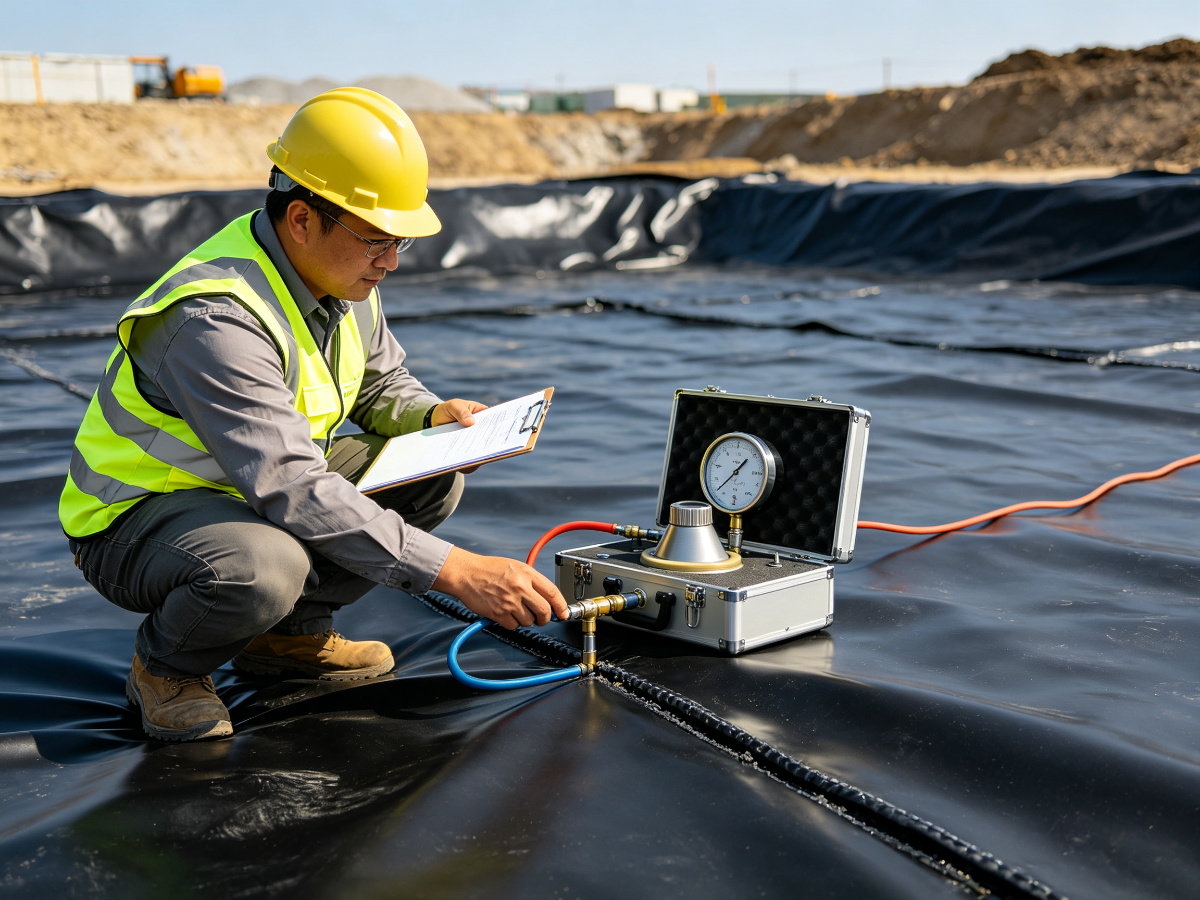
Before any instrument test, walk every seam and check the weld bead visually. Look for continuous, uniform beads, no gaps, no burn marks, no foreign matter embedded in the weld, and no wrinkles under the seam. Mark any suspect area with a marker so it can be repaired or tested separately. A trained eye catches most problems at this stage.
For double-track thermal welds, seal both ends of the air channel and pressurize it to the required test pressure (commonly 1.5–2.5 bar for HDPE). Hold the pressure for a set time and watch the gauge — a drop indicates a leak. This test is fast and covers the entire seam length, which is why it is the backbone of geomembrane installation quality control on large projects.
The vacuum box test is used for single-track extrusion welds, repairs and areas where air pressure testing is not possible. A transparent box with a soap solution is placed over the weld, a vacuum is applied, and any leaks appear as bubbles. It is a reliable field method for verifying spot repairs and short seams.
From time to time (typically every 100–200 m of seam, or as the standard requires) a sample is cut from the weld and tested in a field tensometer. The shear test pulls the two panels apart in their plane; the peel test peels the two panels apart at the weld interface. The sample must break in the parent material, not at the weld, to pass. After sampling, the cut area must be repaired with fresh liner and re-tested.
In addition to seams, check the liner itself for pinholes, scratches and thin spots, especially after handling and after any heavy wind. On landfill and hazardous projects, spark testing can detect pinholes in the installed liner. Document every test result, the date, the seam location and the operator so the as-built record is complete.
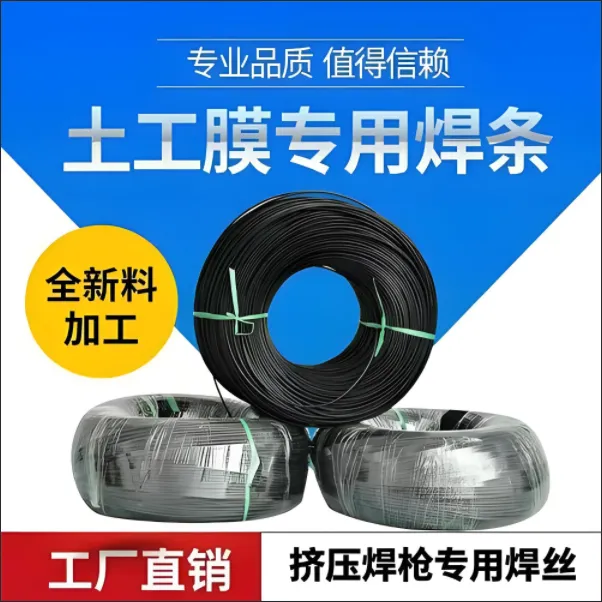
Repairs must be done with new liner offcuts or compatible patch material and quality HDPE welding rod — never with scraps, tape or adhesive. The repair patch should be round or oval with smooth corners, extend at least 50–100 mm beyond the damaged area, and be re-tested after welding. For the installation requirements that precede testing, see our installation standards guide.
For your geomembrane construction project we supply HDPE geomembrane, welding rod and can advise on the right testing tools. A complete inspection procedure protects your investment and gives your client confidence in the finished liner.
Scan code consultation

 English