




 " />
" />【 WeChat QR code consultation】
+86 13698775878
Geomembrane installation is a precision job. If the subgrade, the overlap width or the welding temperature is wrong, even the best HDPE liner will leak. That is why every geomembrane construction project must follow recognized standards and technical requirements from the day the material arrives on site. This article explains the key standards and technical requirements that control the quality of HDPE geomembrane installation, based on our experience supplying liners to ponds, reservoirs and landfill projects.
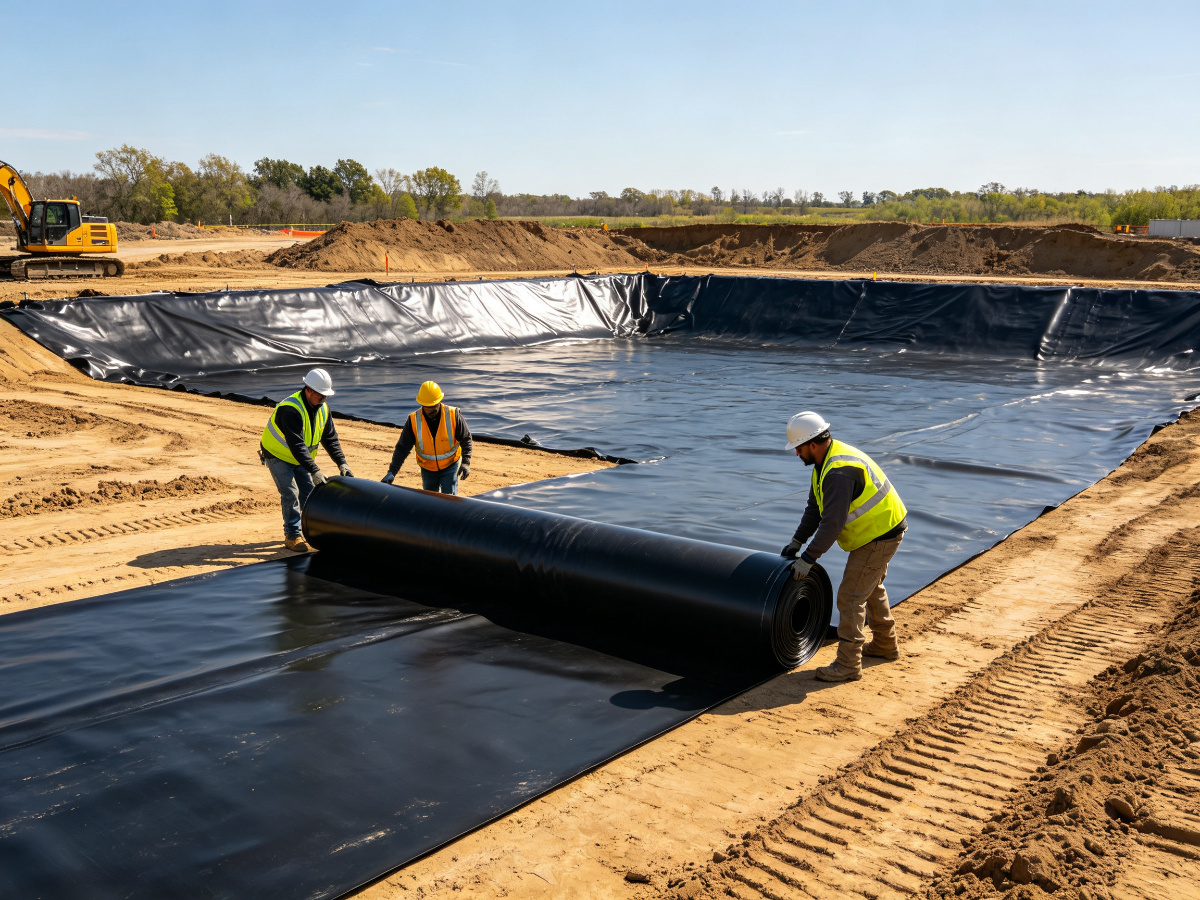
Internationally, the most cited references are ASTM D6455 (standard test method for the selection of geomembranes), the GRI (Geosynthetic Research Institute) GM13 specification for smooth HDPE geomembranes, and the ASTM D7176 series for installation. In China, the equivalent national standard for geosynthetic liner installation is GB/T 50290-2014 Technical Code for Application of Geosynthetics, which specifies requirements for subgrade, laying, welding, testing and acceptance. Whichever standard your project follows, the acceptance criteria should be agreed before the liner is unrolled.
The foundation on which the membrane is laid must be smooth, uniform and compacted. The standard requires the surface to be free of stones larger than about 6 mm, roots, glass, wire or any sharp object that could puncture the liner under load. The subgrade should be compacted to at least 95% of the maximum dry density, and the surface deviation should not exceed about 20–30 mm over a 5 m straightedge. Where the ground is rocky, a non-woven geotextile cushion of 150–400 g/m² should be laid first.
Panels should be laid with the machine direction of the roll parallel to the slope where possible. The minimum overlap between adjacent panels for thermal welding is typically 100 mm, and 75 mm for extrusion welding of repairs. On slopes, panels should be laid from the toe upward so the upper panel overlaps the lower one, preventing water running into the seam. Temporary ballast (sandbags) must be placed every few meters to stop wind uplift. These are basic geomembrane installation requirements that many inexperienced crews skip.
Welding should not be carried out in rain, snow, fog or when the membrane surface is wet or dusty. The ambient temperature range normally accepted is about 0–40 °C, and strong wind (typically above force 4, about 5.5–8 m/s) should stop unrolling and welding because wind-borne dust contaminates the weld zone. If welding is delayed, protect the exposed seams with temporary covers.
Every seam must be tested and meet the standard’s acceptance criteria before backfilling. Non-destructive tests include air pressure testing along the full seam and vacuum box testing of areas that cannot hold pressure. Destructive tests verify weld shear strength and peel strength. The common pass criterion for HDPE is that failure should occur in the parent material (elongation at break) rather than at the weld interface. See our geomembrane installation quality inspection guide for the full testing list.
A professional installation should produce an as-built record: panel layout drawing, weld log, test results, repair records and photos. This documentation is usually required for project handover and warranty. If you need liner material and on-site technical guidance, we supply HDPE geomembrane and welding rod and support your geomembrane construction from material selection to weld testing.
Scan code consultation


 English