



 " />
" />【 WeChat QR code consultation】
+86 13698775878
Weld seams are the weakest link in any geomembrane installation, and most field failures happen at the seam, not in the liner itself. Good welding technique — correct temperature, speed, pressure and rod selection — is the core of reliable geomembrane construction. This technical support guide covers the two main welding methods and the most common seam problems, so your installation crew can produce strong, leak-free welds.
Thermal wedge welding is the fastest method for long straight seams on the pond floor and slopes. A heated wedge melts the two overlapping panels and two rollers press them together to form a double-track weld with an air channel in between. For a 1.0–1.5 mm HDPE liner the typical machine settings are a wedge temperature of about 380–430 °C and a speed of roughly 2–4 m/min, adjusted for ambient temperature and material thickness. The double track lets you air-pressure test the seam along its full length, which is a major advantage.
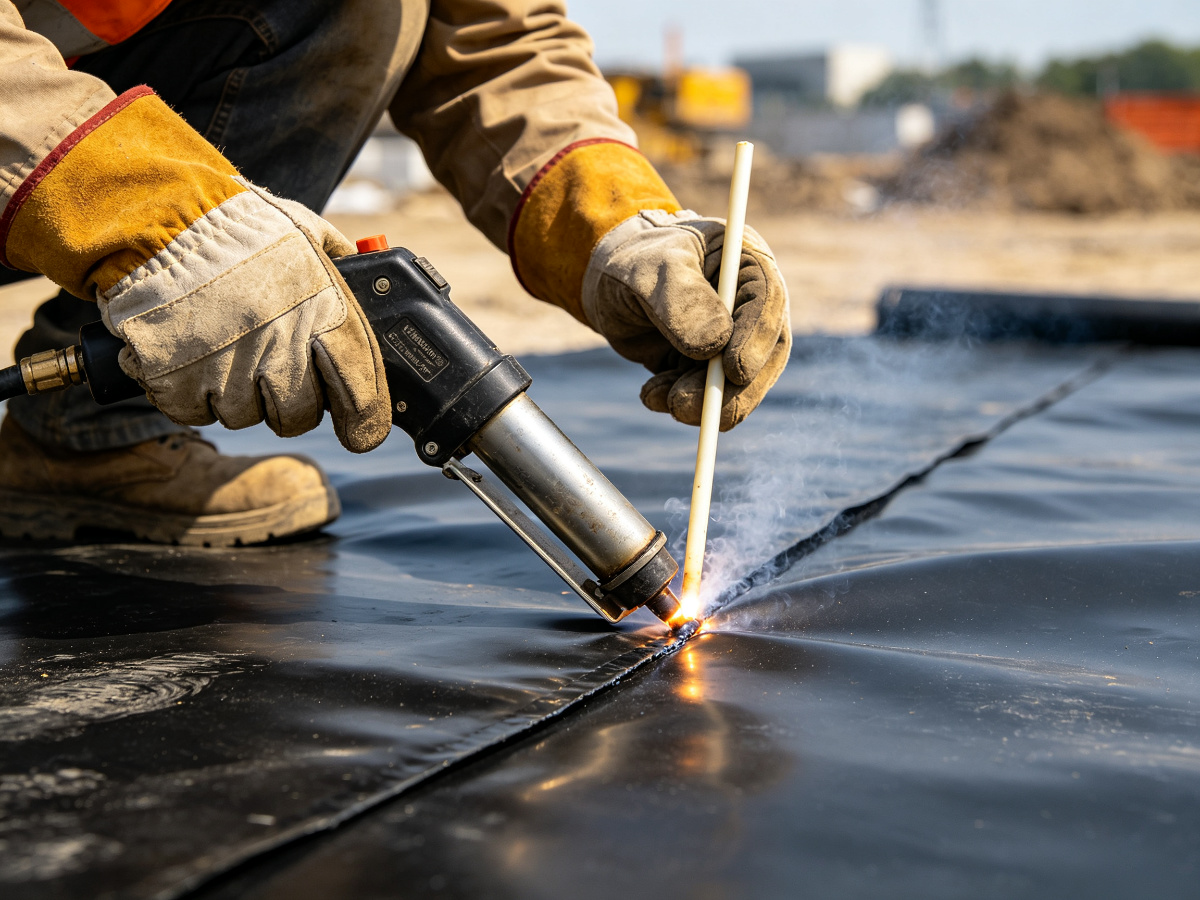
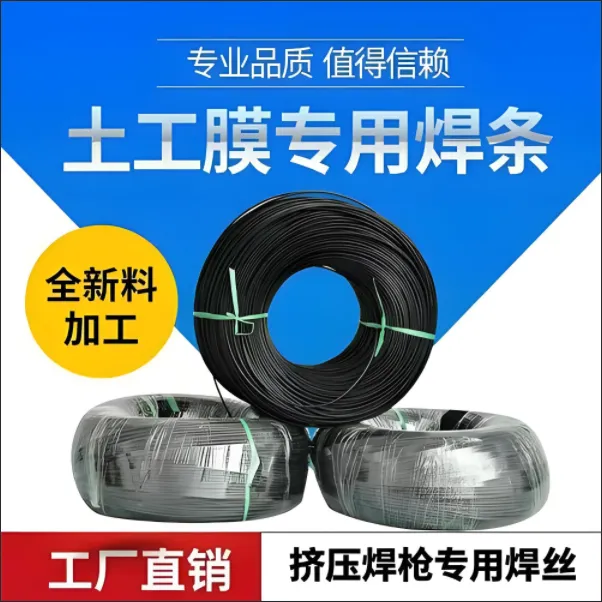
Extrusion welding is used for T-joints, corners, pipe penetrations, repairs and patching. A hand-held extruder feeds molten HDPE from a welding rod over the prepared joint, fusing the panels together. The surface must be cleaned and, ideally, pre-heated so the molten bead bonds properly. The welding rod must match the liner resin: for HDPE liners use an HDPE rod of the same melt index range, in 3.5 mm or 4.0 mm diameter, fresh and free of contaminants.
There is no single magic number — the right temperature and speed depend on the liner thickness, the ambient temperature and the machine. The reliable method is to make a test weld on scrap material, peel it and inspect the bead. A good weld bead is smooth, translucent and fully fused with no voids, no blackening and no separation. Then set the production parameters and re-check every time the weather changes significantly. For the material specifications, see our HDPE welding rod selection guide.
Welding must be done on a dry, clean surface. Stop work in rain, fog or dusty wind. The overlap area should be wiped with a dry cloth just before welding. After welding, allow the seam to cool before testing and backfilling, and never drop soil or stones directly onto a hot weld.
If you need help with weld parameters, liner selection or training your crew for geomembrane installation, we are here to help. We supply HDPE geomembrane, HDPE welding rod and practical on-site guidance. For testing methods and acceptance, read our installation quality inspection guide.
Scan code consultation

 English