



 " />
" />【 WeChat QR code consultation】
+86 13698775878
The geomembrane welding rod is a small but critical consumable in every HDPE liner project. It is the filler material used in extrusion welding to join geomembrane panels, repair holes and weld corner details. Choosing the right HDPE welding rod — correct material, diameter and quality — is just as important as the welding machine itself. This guide covers the types, specifications and selection tips.
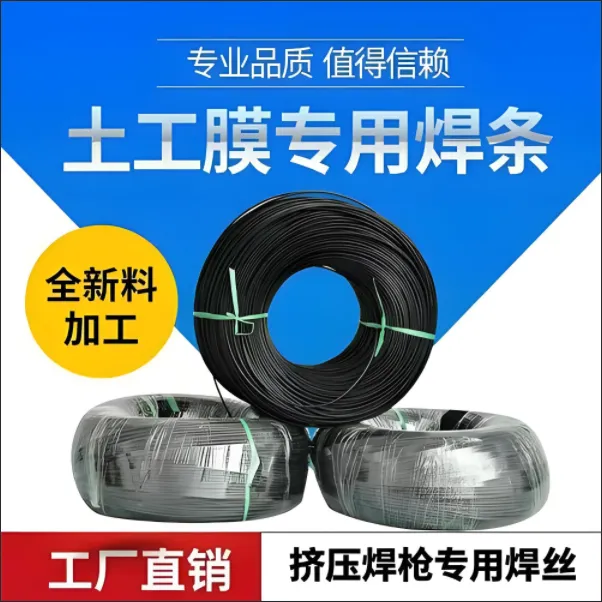
In extrusion welding, a hot bead of molten plastic is pressed along the seam, and the welding rod provides the extra material that fuses the two panels together. If the rod is made from recycled or off-grade material, or has a different melt index from the liner, the weld will be weak and may crack under stress. Always use a fresh HDPE rod that matches the membrane you are installing.
The most common diameters are 3.5 mm and 4 mm round rods, supplied in coils of 5 kg or more. Round rods are the standard choice for extrusion welding of HDPE geomembranes. For special jobs, such as welding textured liners or repairing thick sheets, a triangular or larger profile rod may be used. Check with your supplier that the rod diameter matches your extrusion welder nozzle.
Before welding, clean the seam area and make sure the surfaces are dry. Set the welder temperature and speed according to the rod and membrane specification, then run a short test weld and check the bead. The bead should be smooth and fully fused — no air pockets, no blackening. For large projects, combine proper geomembrane installation procedures with regular weld testing to guarantee quality.
If you are working on a pond, landfill or mining project, we supply HDPE plastic welding rod (geomembrane welding rod) in 3.5 mm and 4.0 mm, in 5 kg coils, factory-direct. Pair it with our HDPE geomembrane for a complete liner system. To understand the whole picture, also read the HDPE Geomembrane Complete Guide.
Scan code consultation


 English