




 " />
" />【 WeChat QR code consultation】
+86 13698775878
Quality inspection of HDPE geomembrane before delivery protects the performance of the liner in service. Thickness and tensile testing are two of the main checks. This article explains these tests and what they tell us.
The nominal thickness of the geomembrane, such as 1.0 mm or 1.5 mm, is checked with a thickness gauge at several points across the roll width. The measured values must meet the tolerance given in the specification. An even thickness ensures uniform strength and weldability.
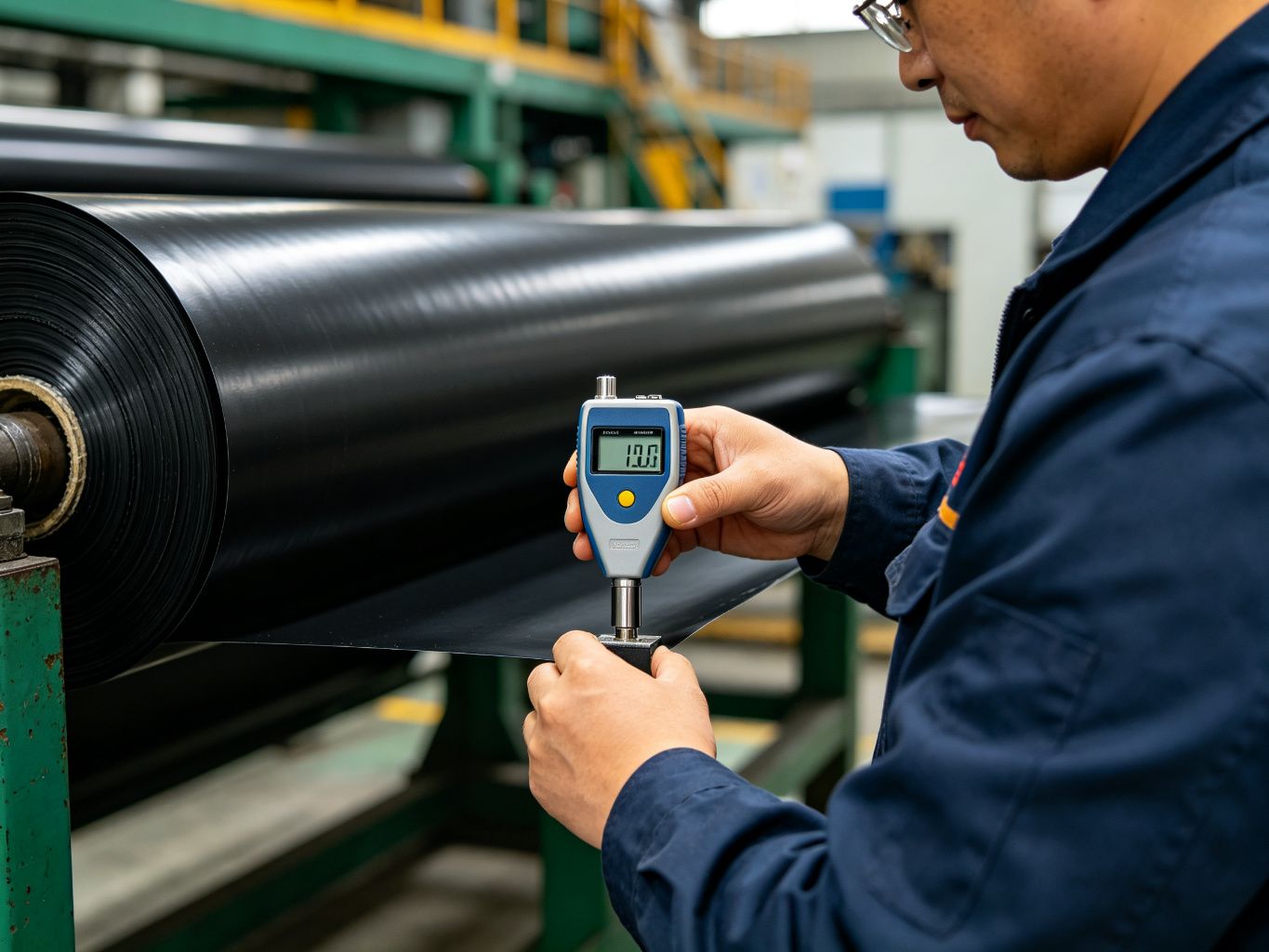
Tensile tests measure the force the membrane can carry before breaking, in both the machine and transverse directions. The results are reported as tensile strength and elongation at break. These values show whether the material has the strength required for the project.
Puncture resistance shows how well the liner resists sharp objects in the base, and tear resistance shows how a small cut behaves under load. Both tests help predict field performance where the membrane is exposed to rough surfaces.
The membrane should not shrink or expand significantly when exposed to temperature change. The dimensional stability test checks this behavior, which is important for seam alignment during installation.
Each delivery should include a test report with the batch number, thickness, tensile results and other required values. Compare the report with the project specification before installation. For welding guidance, refer to our geomembrane welding guide.
Scan code consultation


 English