




 " />
" />【 WeChat QR code consultation】
+86 13698775878
Geomembrane quality testing is essential to ensure that delivered HDPE geomembrane meets the specification and will perform reliably for decades. Both manufacturers and buyers should verify key parameters before acceptance. This article lists the most important tests and what they mean.
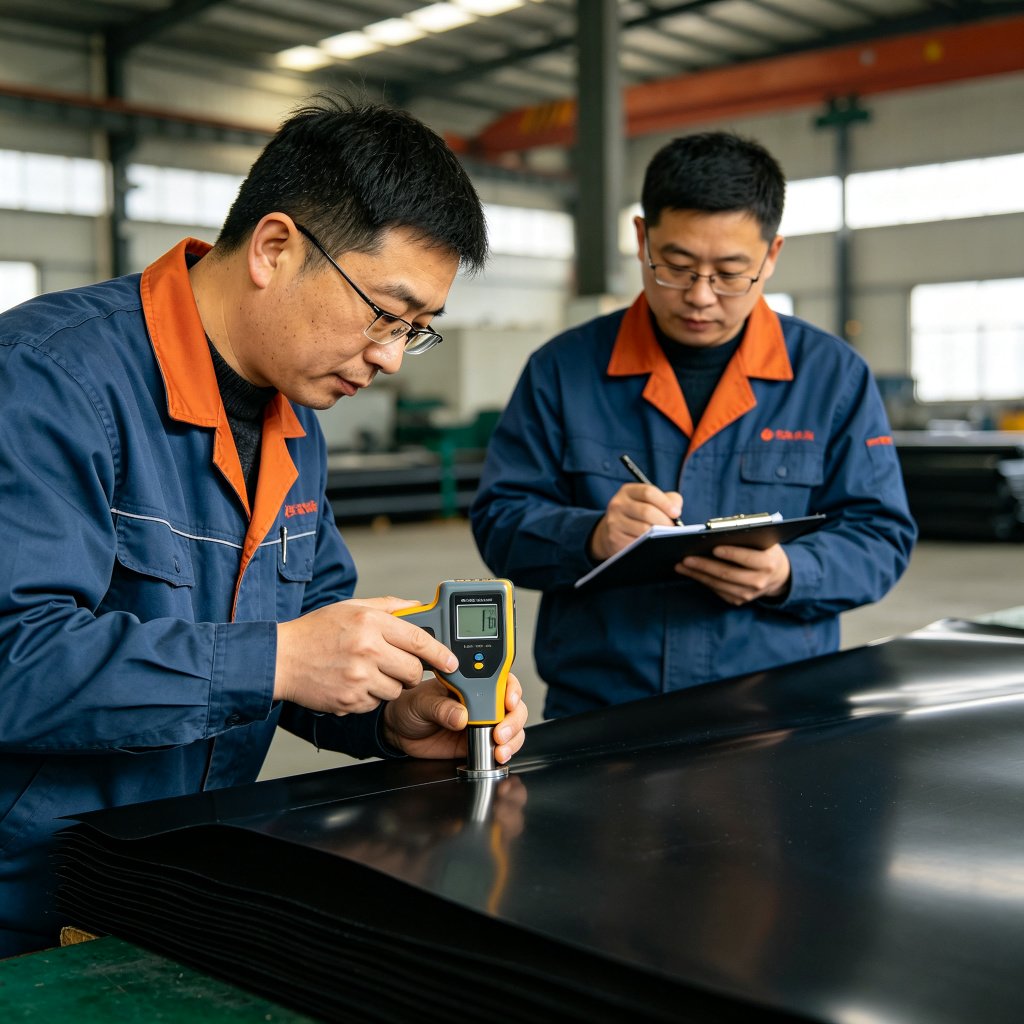
Thickness is the most basic specification of a geomembrane. It is measured with a dial or digital gauge at multiple points across the sheet. The average value and the minimum single-point value must meet the agreed tolerance, usually ±10% of the nominal thickness.
Tensile tests measure the stress at yield and at break, plus the elongation percentage. These values indicate how much load the membrane can carry and how well it adapts to subgrade settlement.
Tear resistance and puncture resistance tests simulate real installation stresses from stones, roots and construction equipment. Higher values mean the membrane can tolerate rougher subgrades without protection layers.
For installed systems, seam integrity is verified by air pressure testing, vacuum box testing and peel/shear testing of weld samples. A complete testing plan gives confidence that the whole liner system is watertight.
All HDPE geomembranes supplied by our factory are tested in accordance with international standards before shipment, and test reports can be provided on request. See our HDPE geomembrane product page for specifications and factory-direct quotes.
Scan code consultation


 English