




 " />
" />【 WeChat QR code consultation】
+86 13698775878
A grass grid system is only as good as its installation. Most problems — panels that lift, grids that crack under wheels, or grass that fails to grow — come from a poor base, loose joints or the wrong fill. This step-by-step grass grid installation guide covers the method we recommend for car parks, driveways, slopes and lawns, so you get a flat, strong and green surface that lasts.
Remove the topsoil and soft material to the required depth. For car parking, excavate about 200–250 mm, lay a geotextile separator if the subgrade is soft, then fill and compact 150–200 mm of clean aggregate in layers. The surface must be level with a slight fall for drainage. For pedestrian lawns, a compacted 100–150 mm sub-base is usually enough. Do not skip compaction — a soft base is the number one cause of a failed grass grid.
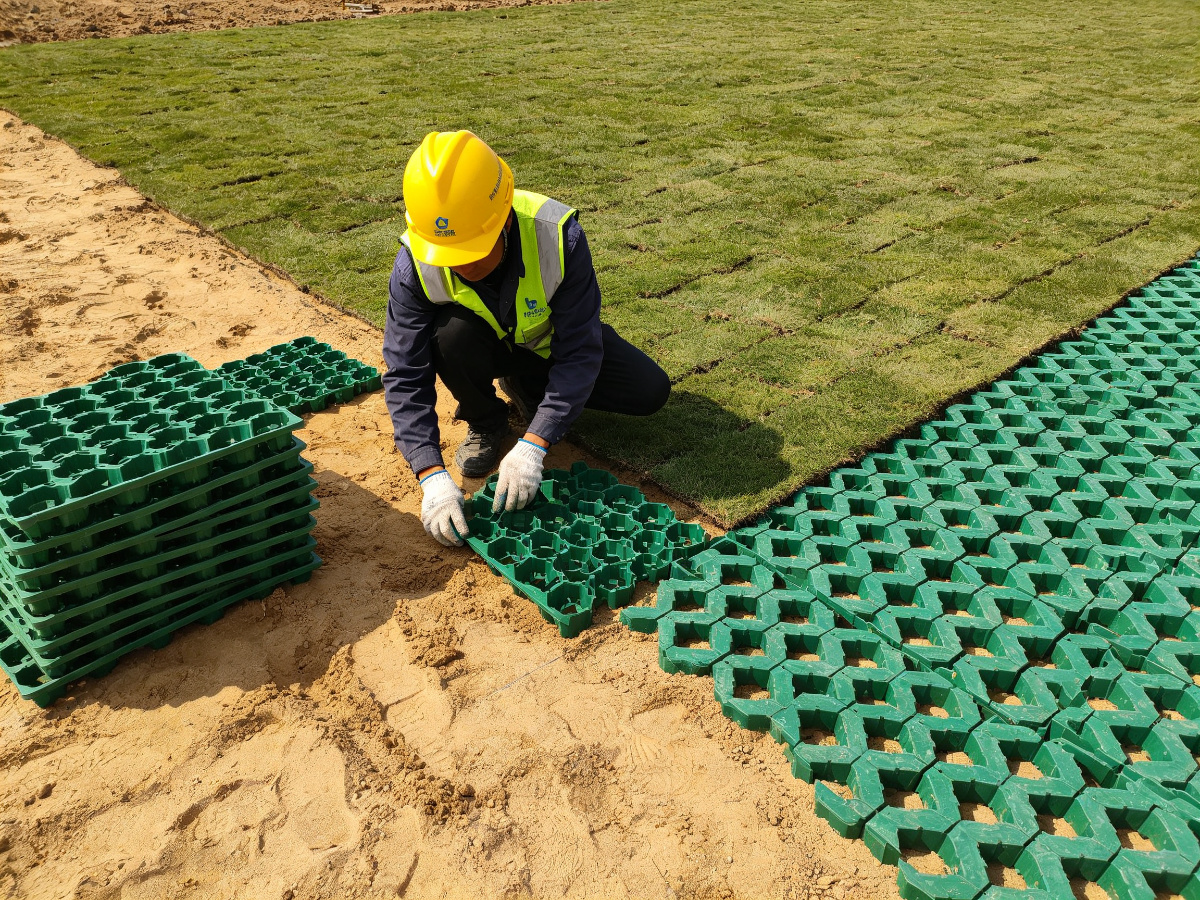
Start from a straight edge and lay the panels on the prepared base with the joint clips engaging fully. Press each panel down so it sits flat and flush with its neighbors. Work in a staggered pattern where possible so the joints do not line up into long weak lines. Trim edge panels with a saw or cutter to fit against walls, curbs and tree pits. Keep the panels flat while laying — a twisted panel never settles flat later.
On slopes steeper than about 1:3, fix the grid with anchor pins at every panel corner or as recommended, driving the pins into the base below. At the edges, pin the first and last rows and, if needed, add a wooden or concrete edge restraint so the grid does not spread sideways under load. For slope protection details, see the grass grid product page.
Fill the cells with sandy loam or a 50/50 mix of topsoil and sand. Fill in two passes: first a rough fill, lightly compact or sweep in, then top up so the cells are full and the soil is just below the top of the grid. Leave about 5–10 mm of the cell wall visible so the grid edges stay clean. Do not overfill — soil above the grid gets washed away and makes the surface muddy.
Mix grass seed into the top layer or sow after filling, then water gently. For the first two to three weeks keep the area moist and avoid driving on it. Mow when the grass is about 80–100 mm high. Top up soil in any cells that settle after the first rains. With correct grass grid installation, the surface carries vehicles and stays green year after year. For the specification and load data, read our grass grid specification guide.
Scan code consultation


 English