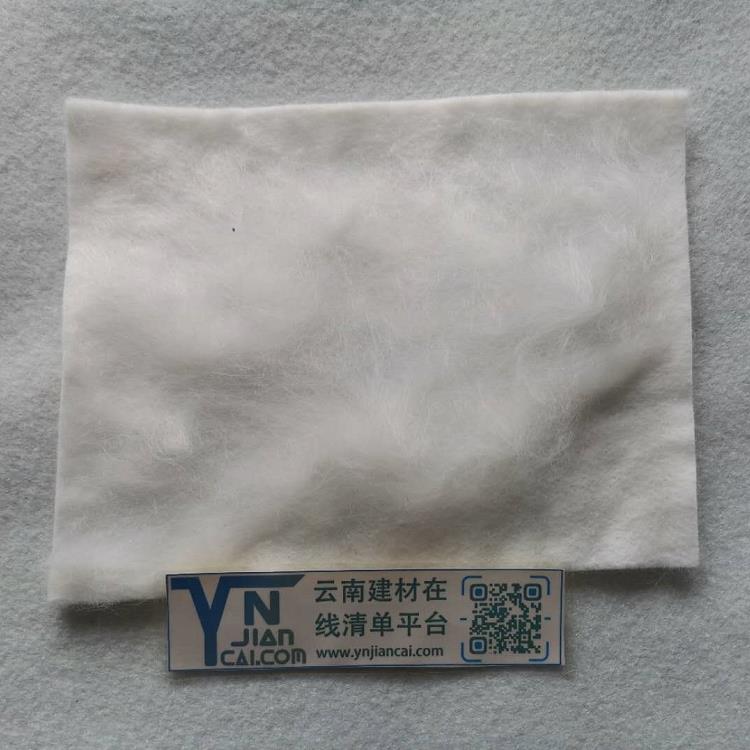
Filament geotextile is slightly higher in price than ordinary short fiber geotextile, but its strength is far greater than that of short fiber. It is usually used more in landfills.
If the above specifications do not meet your needs, you can select others and then explain in the remarks.
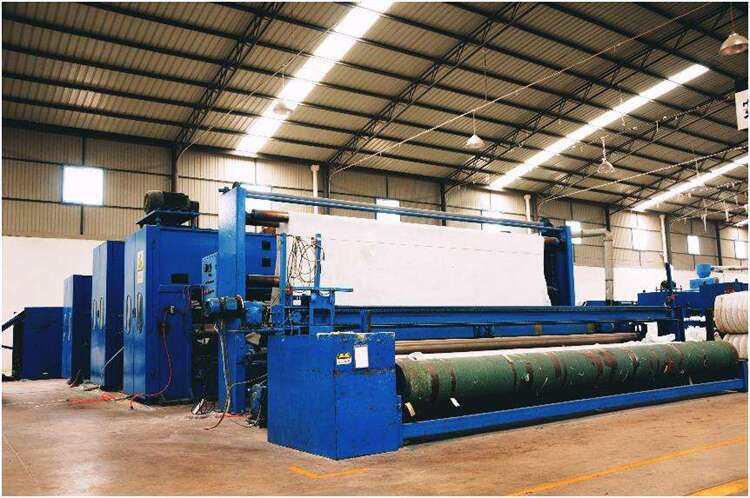
Filament geotextile non-woven geotextile includes short fiber needle-punched geotextile and spunbond filament geotextile. Short fiber needle-punched geotextile is made of polyester, polypropylene or nylon short fiber as raw material, through blending, carding, web laying, needle punching, and re-needle punching. Its characteristics are high density, fluffy structure, anti-corrosion, aging resistance, acid and alkali resistance, good water absorption and permeability, high tensile strength, and large deformation resistance. It is suitable for projects such as preventing road surface frost heave, slope protection, and canal protection layers, and is widely used in China. For example, in the beach of Liaohe Oilfield, the soil is mostly in a soft plastic and fluid plastic state with high water content, high compressibility, and low bearing capacity. When road construction starts in the spring thaw period, due to the redistribution of soil moisture, the road surface is severely frost-heaved. In response to this situation, Liaohe Oilfield designed and selected domestic LHw-400 polyester needle-punched non-woven geotextile to prevent road surface frost heave of frozen soil fill subgrade during the spring thaw period. The specific method is to set a single layer of LHw-400 geotextile as an isolation layer under the slag road surface. The test results show that this geotextile has a significant isolation effect, can effectively prevent road surface frost heave and mud boiling, and has reinforcement and stress diffusion effects, greatly improving the stability of wet and soft subgrades. Another example is the Daguangba Hub Project, where the total length of the river-blocking dam is 5842 meters, including 2792 meters of left-bank earth dam and 2339 meters of right-bank earth dam. The upstream slope protection of the earth dam adopts a method combining needle-punched non-woven fabric and riprap. After two years of slope protection construction, it shows that this method has the advantages of resisting wind and wave erosion, reducing wave run-up, and strong adaptability to deformation. Another example is the Shandong Yellow River Diversion to Qingdao Project with an investment of 800 million yuan, where short fiber needle-punched non-woven geotextile was selected as the canal surface protection layer. The project design uses more than 900,000 square meters of cloth. The construction method is to lay a layer of plastic film on the canal surface, then lay geotextile on top, and then arrange concrete slabs to prevent water in the canal from leaking underground. The filament geotextile mainly plays a protective role to prevent the plastic cloth from being damaged by the concrete slabs. In addition, short fiber needle-punched geotextile is also used as drainage facilities in the Angou River rockfill dam, and applied to soft foundation treatment of sea dikes, etc., all of which have achieved good technical and economic effects.









 English