




 " />
" />【 WeChat QR code consultation】
+86 13698775878
Geotextile fabric is widely used in road, drainage and landscaping works to separate, filter and reinforce soil layers. Correct installation is essential for the fabric to work. This article explains the key installation steps.
Clear the ground of sharp stones, roots and debris before laying the geotextile. A smooth surface reduces the risk of punctures and allows the fabric to lie flat. On soft ground, a thin sand layer can be added as a cushion.
Roll out the geotextile without tension and allow the overlaps between rolls as specified for the application, usually 300-500 mm. Overlaps must be in the direction of the expected flow or load. On slopes, the upper roll should overlap the lower roll.
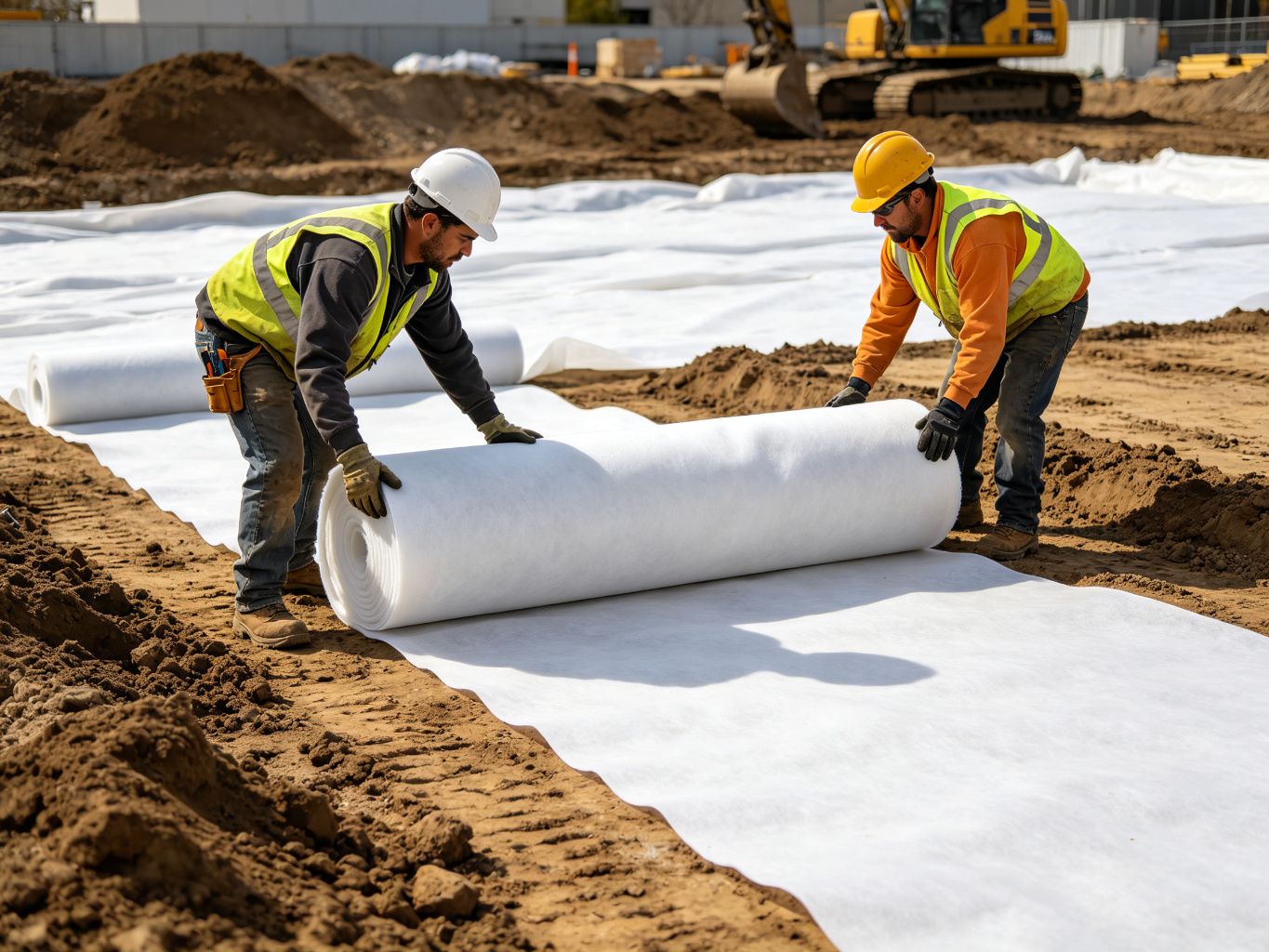
Fix the fabric edges with pins, staples or soil cover to stop wind lift and movement. In high-wind areas, install the fabric and cover it with the next layer on the same day. For critical applications, seams can be sewn or bonded according to the specification.
Place the cover layer, such as gravel, soil or aggregate, as soon as possible after laying. Drop the material from a low height to avoid puncturing the fabric. The cover layer also protects the fabric from sunlight, which can reduce its strength over time.
Inspect the installed fabric for tears, gaps or exposed edges before covering. Repair any damage with an extra piece of fabric overlapping the damaged area by at least 200 mm. A properly installed geotextile layer gives reliable long-term performance.
Scan code consultation


 English