




 " />
" />【 WeChat QR code consultation】
+86 13698775878

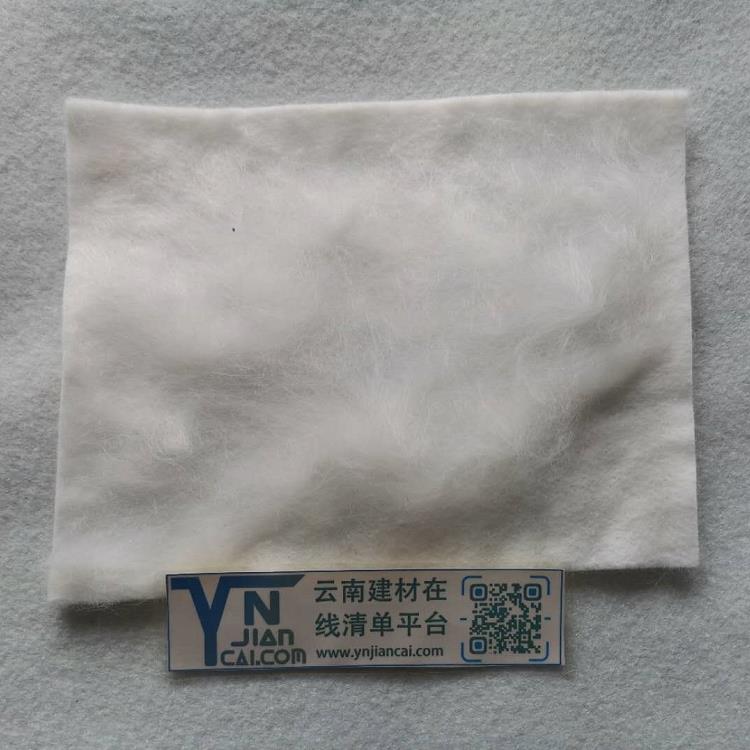
Geotextile is a synthetic permeable material used in civil construction projects to improve soil characteristics. Geotextiles make poor soils more suitable for construction because they have the ability to separate, filter, reinforce, protect and drain soil.
Geotextiles can be used in many infrastructure projects, such as roads, landfills, ports, drainage structures and other civil engineering projects.
Reduce the environmental impact of the project.
Geotextiles are made of polymers such as polypropylene and polyester. According to the manufacturing process, they are divided into three categories: woven fabrics, non-woven fabrics
Knitted fabrics, other geosynthetic materials include geonets, geocells, geomembranes, geogrids, etc. Woven geotextiles are common, and their manufacturing method is similar to clothing textiles. This geotextile is made of two sets of parallel threads or yarns. Non-woven geotextiles are made of continuous yarn filaments or staple fibers. They are bonded together by thermal, chemical or mechanical techniques or a combination of techniques. Knitted geotextiles are made by interlocking a series of yarn loops together. These geosynthetic materials are made by combining knitting techniques with other methods such as weaving.
Geotextiles are commonly used to improve soil characteristics before constructing embankments, roads, pipelines and retaining structures. Geotextiles have multiple functions such as filtration, drainage, reinforcement, buffering, waterproofing and isolation. This is the main reason geotextiles are used in construction. When geotextile is installed between two different soils, it will prevent mixing when water enters the soil layer. In this way, the desired soil characteristics can be preserved. By separating fine subgrade soil from aggregate (such as roads), geotextile preserves the drainage performance and strength of the base material. These geotextiles have special thickness and permeability to prevent soil contamination and allow water flow without affecting structural integrity. Some application areas of geotextiles include: between landfills and stone bases, between subgrades and base courses of paved and unpaved roads, between railway subgrades, between geomembranes and sand drainage layers. When water needs to move in both directions, the filtration characteristics of geotextiles are used. These types of geotextiles can be woven or non-woven, and they are used to prevent fine aggregates from moving between soil layers.
The two main characteristics of geotextiles involving permeability are porosity and permeability. According to these characteristics, geotextile can also promote the lateral flow of water, dissipating the kinetic energy of groundwater capillary rise. This application of geotextile can be either vertical or horizontal, helping to solve drainage problems of roads and buildings. The reinforcing effect of geotextile is comparable to the role of steel bars in concrete construction. Geotextiles are used in embankments and roads built on poor-grade soils, implementing design parameters provided by geotechnical engineers. Geotextiles can be impregnated with asphalt or other mixtures to make them impermeable and able to restrict the vertical flow of water. For this application, geotextiles must be non-woven. Impermeable geotextiles can be used to prevent soil or groundwater from being contaminated by the above pollutants, and also help prevent drinking water from being lost due to evaporation.
Geotextiles have a very wide range of applications in the field of civil engineering, including the following applications:
Roads: Geotextiles are widely used in road construction to reinforce soil by increasing tensile strength. Geotextiles can be used as a rapid dewatering layer for subgrades.
Railways: Geotextiles are used to separate individual soil layers without impeding groundwater circulation where the ground is unstable. This can also prevent layer materials from moving laterally under the continuous impact and vibration from passing trains.
Agriculture: Non-woven fabrics are used for mud control, improving paths and trails used by cattle or light traffic.
Drainage: Geotextiles are used as drainage filtration mechanisms in roads, highways, earth dams, reservoirs, retaining walls, drainage ditches and many other applications.
Scan code consultation


 English