




 " />
" />【 WeChat QR code consultation】
+86 13698775878
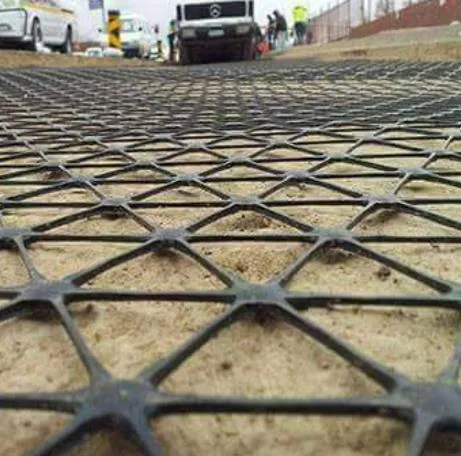
Geosynthetic materials are mainly used in stabilization applications to facilitate construction work. Even if the completed pavement can be supported by the subgrade, if there is no some kind of stabilization measure at the beginning, the initial construction work may be difficult or sometimes impossible to start. Geosynthetic materials provide a cost-effective alternative to other expensive stabilization methods, such as dewatering, excavation and replacement of thick layers of selected granular materials, or chemical methods such as lime stabilization. Geosynthetic reinforcement layers also enable contractors to meet the deflection standards required below the subbase. Geosynthetic materials can provide long-term benefits and improve road performance during their design life.
There are multiple benefits of using geosynthetic materials in road construction, including: reducing stress on the subgrade, preventing aggregate from penetrating into the subgrade, preventing subgrade fine particles from pumping into the granular layer (separation and filtration), preventing contamination of the granular layer, it allows the use of open-graded drainage aggregate in road design and construction (filtration), reduces the excavation depth required to replace unsuitable and soft subgrade materials, and provides a harder subgrade or working platform (separation and reinforcement), increases the stiffness of granular materials (reinforcement), and reduces differential settlement (reinforcement).
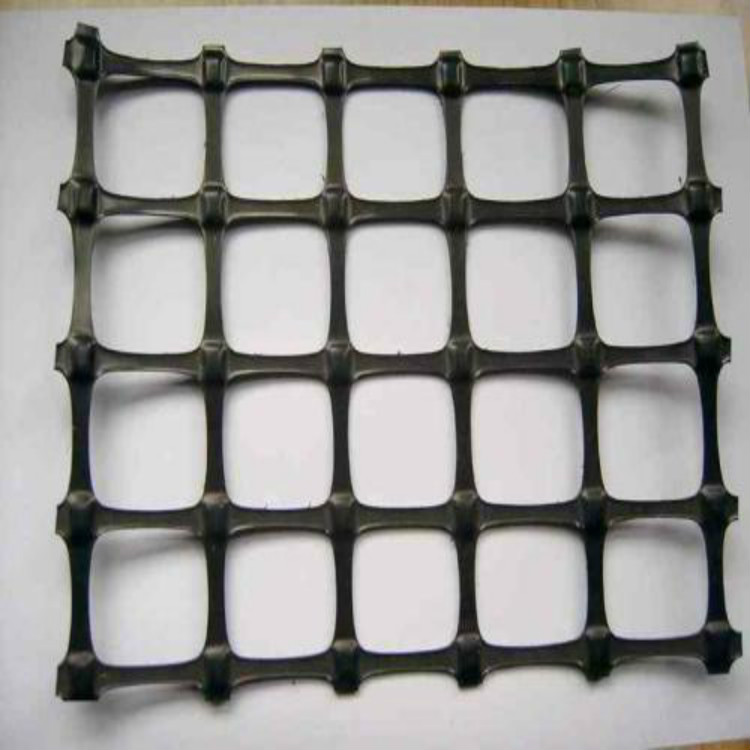
The main mechanism of geogrid reinforcement is called lateral confinement. In fact, loads applied to the pavement produce lateral spreading of the aggregate.
When the aggregate moves downward and spreads out due to the applied load, tensile lateral strain is generated at the aggregate-geogrid interface. Interlocking the aggregate into the geogrid apertures provides lateral confinement and prevents the aggregate from spreading. Through the shear interaction between aggregate and geogrid, the aggregate is laterally confined, and tensile force is transferred from the aggregate to the geogrid. The stiffness of the geogrid (tensile strength of geogrid at very low elongation) plays an important role in providing higher lateral confinement. Due to the lateral confinement of the aggregate layer caused by geogrid reinforcement, it results in higher layer stiffness and higher load distribution angle, thereby reducing the normal stress on the subgrade directly below the applied load.
When used in flexible pavements, geosynthetic reinforcement provides two main benefits through the above mechanisms: reducing pavement thickness (base course reduction), or increasing applicability and design traffic and reducing maintenance work and costs. In cases where the subgrade is very weak, geosynthetic materials can provide a thinner, harder working platform or semi-infinite subgrade for road construction. This will again lead to a reduction in pavement thickness or indirectly increase the design traffic volume, because the pavement will have a harder subgrade.
Scan code consultation


 English