




 " />
" />【 WeChat QR code consultation】
+86 13698775878
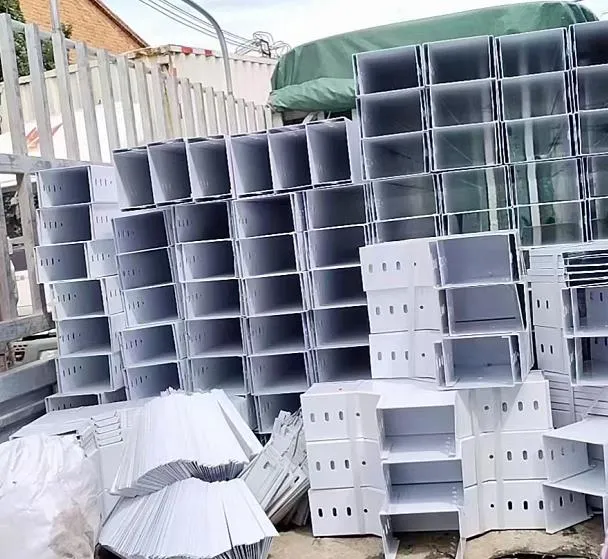
More and more data and communication cables are being stuffed into a confined space to meet bandwidth and throughput demands. To control temperature rise, all of this may require powerful ventilation, not to mention clean electric heating and ventilation where temperature control is critical. Therefore, cable trays have huge demand and importance in the industry, and are also one of the main components recommended by codes.
Cable tray is a tool for organizing all these wires. A single large cable tray installation can route a large amount of wiring by using a grounded metal barrier along the centerline to separate power cables from data communication cables. It can prevent the formation of an untidy mass of conductors that is difficult to trace when changes are needed or faults occur. It is important to understand the difference between cable trays and raceways. A cable tray system is a unit or assembly of units or sections, and associated fittings, forming a structural system used to securely fasten or support cables and raceways. On the other hand, raceways are usually mounted on the walls of rooms where power and communication cables terminate. Cable trays found typically above or below raised floors carry open wiring. They are used to connect cables from the source to where they will be used.
Because cable trays run along the perimeter of a room, power and data conductors can enter and exit at different points, then reach their destination through cable channels. Listed cable tray clamps or adapters secure wire troughs terminating at the tray to the cable tray system. Cable trays come in a variety of sizes, styles (such as ladder, ventilated trough, ventilated trough, solid bottom and similar structures) and materials (metal and non-metal). If the cable tray is made of conductive material, it is one of the permitted types of equipment grounding conductors. Paint should be scraped off and bonding jumpers installed at locations where sections are bolted together to ensure grounding continuity.
Ladder trays are typically used where larger bundles or heavier cables exist. The two side rails are connected by beams or rungs on the ladder cable tray. Rungs serve as useful anchors for securing cables. Trough-type cable trays are prefabricated structures with side rails and ventilated bottoms. Ventilated trough-type cable trays provide better cable support than ladder-type, but the difference is small. Since sagging optical cables can degrade system performance, solid cable trays are often used in optical cable installations. However, the main motivation for choosing solid-bottom trays is the desire to reduce electromagnetic radio frequency interference or protect sensitive circuits.
When a computer room serves both computer and telecommunications equipment, underground cable tray systems are often installed. In cable trays, the use of single bare conductors and joints is permitted. Service conductors, feeders, branch circuits, communication circuits, control circuits and signal circuits are permitted. As well as permitted and prohibited uses, and other codes and construction and installation details.
Cable trays are a type of mechanical support for cables used for power distribution, control and communication. They are ideal for running large numbers of power or data cables overhead or under floors. Cable trays come in a variety of shapes and sizes, and some regulations require the use of specific accessories, such as side or cover plates. Steel, aluminum or fiber reinforced plastic can be used. When looking at different types of cable trays for your machine or customer facility, it is important to understand which cables you will be installing and how long they will run.
If combustible cable jackets catch fire, cable fires can spread along cable trays within the structure. This can be easily avoided by using fire-resistant cable jackets or fire-resistant coatings on installed cables. Since such fire protection measures may reduce heat dissipation from installed cables, thick coatings or long-duration fire protection may require changes to cable ampacity ratings. Since cable trays are often installed in hard-to-reach places, regular cleaning of the premises is essential for safety. If trays are not regularly inspected and kept clean, flammable dust and debris may accumulate. The use of flame retardants or fire-resistant materials can reduce the flammability of plastic and fiberglass reinforced plastic cable trays.
Scan code consultation


 English