





【 WeChat QR code consultation 】
+86 13698775878
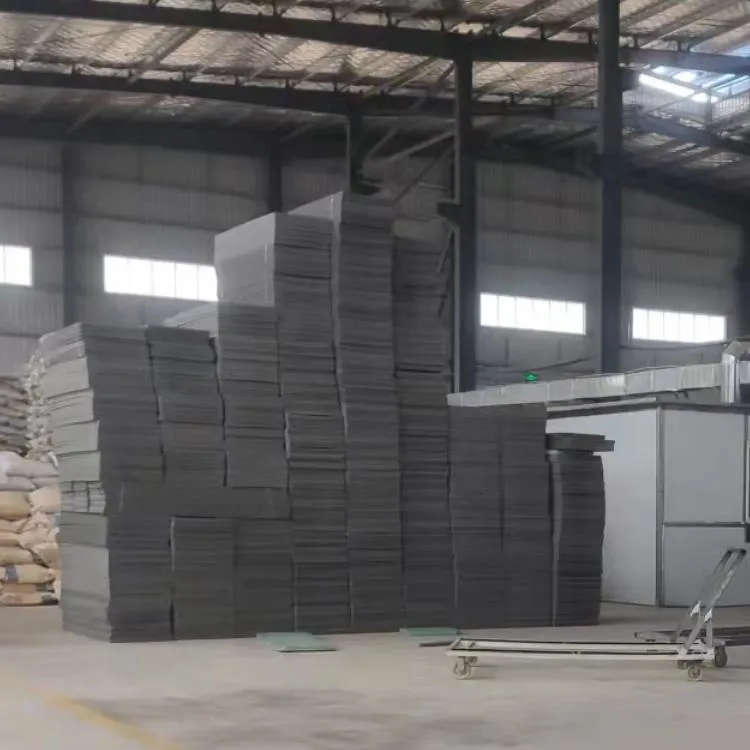
Thermal Conductivity of Extruded Polystyrene
Thermal insulator - parameter thermal conductivity is defined as the amount of heat (in watts) transferred through a square area of material of a given thickness (in meters) due to temperature difference. The lower the thermal conductivity of the material, the greater the material's ability to resist heat transfer, and therefore the greater the insulation effect. Typical thermal conductivity values for extruded polystyrene range between 0.025 and 0.040 W/m∙K.
Generally speaking, thermal insulation is mainly based on the extremely low thermal conductivity of gases. Compared with liquids and solids, gases have poor thermal conductivity, so if they can be trapped (for example, in a foam-like structure), they are a good insulation material. Air and other gases are usually good insulators. But the main benefit is the absence of convection. Therefore, many insulation materials (such as extruded boards) work simply by having a large number of air-filled pockets that prevent large-scale convection.
The alternation of solid materials causes heat to have to pass through many interfaces, resulting in a rapid decrease in the heat transfer coefficient.
Extruded Polystyrene Insulation Material
Heat loss through walls, the main source of calculating house heat loss is walls. Calculate the heat flux rate through a wall with an area of 3m x 10m (A=30m²). The wall is 15 cm thick (L1), made of bricks with thermal conductivity k1=1.0 W/mK (poor insulation performance). Assume indoor and outdoor temperatures are 22°C and -8°C respectively, and the internal and external convective heat transfer coefficients are h1=10 W/m²K and h2=30 W/m²K, respectively. Please note that these convection coefficients depend to a large extent on environmental and internal conditions (wind, humidity, etc.).
Calculate the heat flux (heat loss) through this non-insulated wall.
Now assume insulation on the outside of this wall. Use 10cm thick (L2) extruded polystyrene insulation material with thermal conductivity k2=0.028 W/mK, and calculate the heat flux (heat loss) through this composite wall.
Solution:
As mentioned earlier, many heat transfer processes involve composite systems, even combinations of conduction and convection. For these composite systems, it is usually convenient to use the overall heat transfer coefficient (called the U coefficient). The U factor is defined by an expression similar to Newton's law of cooling:
Overall heat transfer coefficient
The overall heat transfer coefficient is related to the total thermal resistance and depends on the geometry of the problem.
Assuming one-dimensional heat transfer through a plane wall, without considering radiation, the overall heat transfer coefficient can be calculated as:
Overall heat transfer coefficient - heat loss calculation
Then the overall heat transfer coefficient is:
U=1/(1/10+0.15/1+1/30)=3.53 W/m²K
Then the heat flux can be simply calculated:
q=3.53[W/m²K] x 30[K]=105.9 W/m²
The total heat loss through this wall will be:
q_loss = q. A = 105.9[W/m²] x 30[m²] = 3177 W
Insulated composite wall
Assuming one-dimensional heat transfer through a plane composite wall, no contact thermal resistance, without considering radiation, the overall heat transfer coefficient can be calculated as:
Overall heat transfer coefficient - insulation calculation
For extruded polystyrene insulation material, the overall heat transfer coefficient is:
U=1/(1/10+0.15/1+0.1/0.028+1/30)=0.259 W/m²K
Then the heat flux can be simply calculated:
q=0.259[W/m²K] x 30[K]=7.78 W/m²
The total heat loss through this wall will be:
q_loss = q. A = 7.78[W/m²] x 30[m²] = 233 W
It can be seen that adding insulation material significantly reduces heat loss. It must be added that adding the next layer of insulation will not lead to such high savings. This can be better seen from the thermal resistance method, which can be used to calculate heat transfer through composite walls. The steady-state heat transfer rate between two surfaces is equal to the temperature difference divided by the total thermal resistance between these two surfaces.
Scan code consultation


 English