




 " />
" />【 WeChat QR code consultation】
+86 13698775878
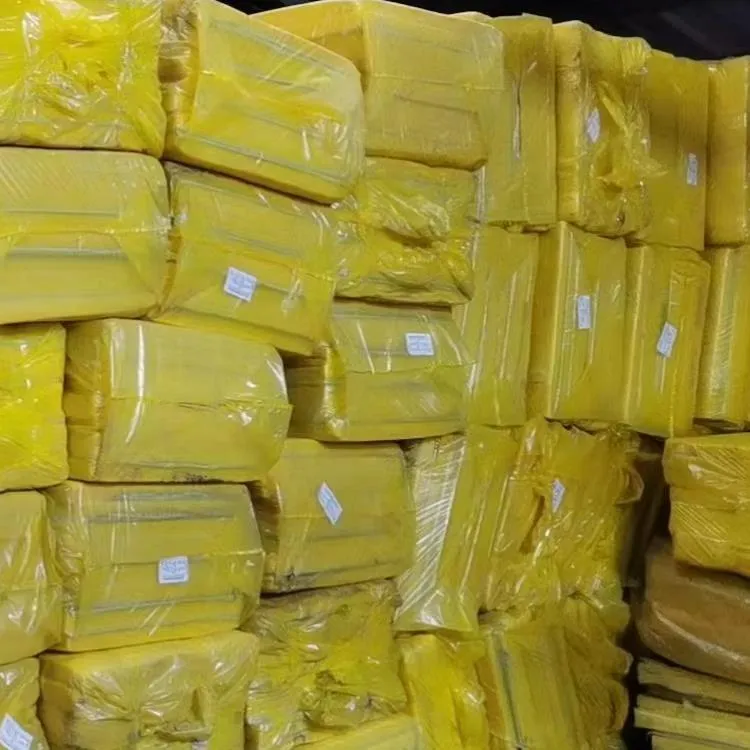
For a long time, fiberglass insulation has been the material of choice for slowing heat transfer through house walls and ceilings. Although it may have the additional benefit of forming a fire barrier between interior and exterior walls, fiberglass may still not be able to achieve the natural capabilities of rock wool boards. Like fiberglass, rock wool is an insulation material, and it is also often used in residential, commercial and industrial buildings. However, rock wool can be distinguished from fiberglass by comparing insulation, fire resistance, moisture resistance and sound insulation capabilities.
The manufacturing process of rock wool insulation helps explain the product's true fire-resistant potential. It is mainly composed of basalt and a recycled steelmaking byproduct called slag. These ingredients are superheated, causing them to liquefy and mix together to form a lava-like liquid. To melt these substances, the temperature must exceed 2,900 degrees Fahrenheit.
The mixture is then blown into a large spinning chamber designed to stretch the superheated liquid into fibers. These fibers are then gathered together and compressed into mats, which can be cut into rock wool insulation boards.
Through this process to produce rock wool, all organic matter is eliminated, greatly improving the mold and mildew resistance of the finished product.
The confusion about the amount of recycled material used to manufacture rock wool insulation can mainly be attributed to statistics on general mineral wool insulation materials. Rock wool is a specific mineral wool insulation material, relatively popular in the construction market. And in use, it has also derived the name mineral wool, becoming a synonym for rock wool board, that is, mineral wool. Among mineral wool insulation materials, the average contains 75% recycled material.
Because energy distinguishes standard "rock wool board" insulation and "slag wool" insulation, but does not note the difference in the amount of recycled material for each product, it also blurs the boundaries between products.
Generally speaking, the amount of recycled material in rock wool insulation is not precise, because it ultimately depends on the specific product. Standard rock wool insulation may only have 16% to 40% recycled material, while slag rock wool insulation can be made with up to 75% recycled material.
3. Rock wool has excellent insulation properties.
Both fiberglass and rock wool can effectively keep houses cool in summer and warm in winter, but the specific thermal efficiency of these materials is amplified in rock wool. Although fiberglass insulation can provide an R-value of about 2.2 to 2.7 per inch of insulation, the value is between 3.0 and 3.3.
As fiberglass insulation begins to degrade, it will also lose its thermal efficiency within a few years. Due to the construction method and materials used to manufacture rock wool insulation, the thermal performance of this insulation remains stable throughout the life of the building. However, rock wool often costs more per square foot than fiberglass insulation.
Scan code consultation


 English