




 " />
" />【 WeChat QR code consultation】
+86 13698775878
Welding rod quality directly affects the strength of geomembrane field seams. This article lists the key checks for accepting HDPE welding rod deliveries, from raw material to packing.
Confirm the resin grade and check the melt flow rate reported in the certificate. The rod resin should match the membrane material to produce a homogeneous weld. Rods made from off-spec material may melt unevenly and create weak seams.
Measure the rod diameter with a caliper at several points along the coil. The diameter should stay within the stated tolerance, normally around ±0.2 mm. Flattened or uneven rod profiles feed poorly into the welding gun and leave voids in the groove.
Inspect the rod surface for bubbles, cracks, contamination or color streaks. A clean, smooth surface indicates proper extrusion and consistent material quality. Coils should be wound evenly without sharp kinks.
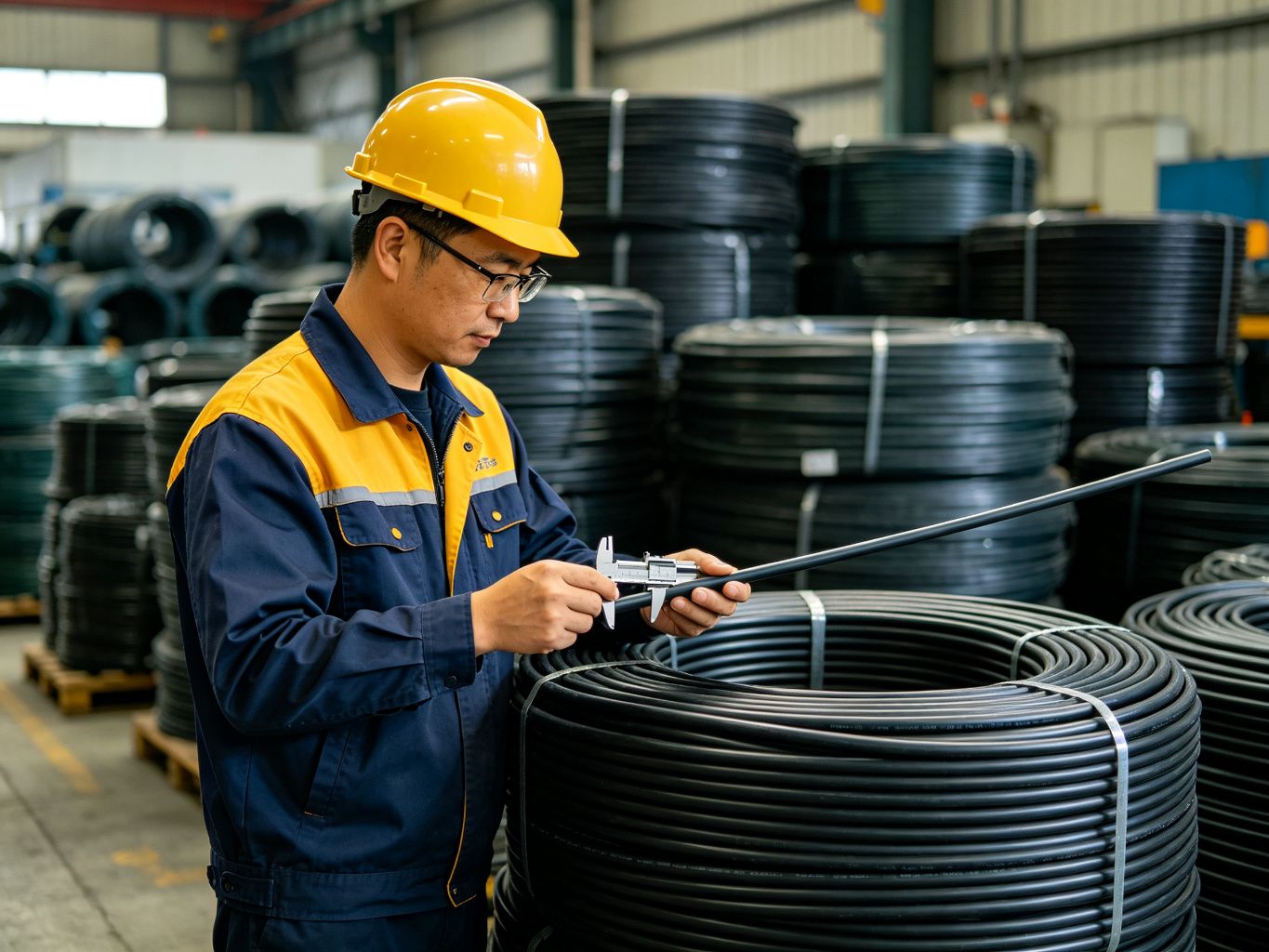
Check the packing condition, coil weight and batch number. The delivery should include a quality certificate and material test report. Keep a sample from each batch for reference during installation.
For welding parameters and seam testing, see our geomembrane welding guide.
Scan code consultation


 English