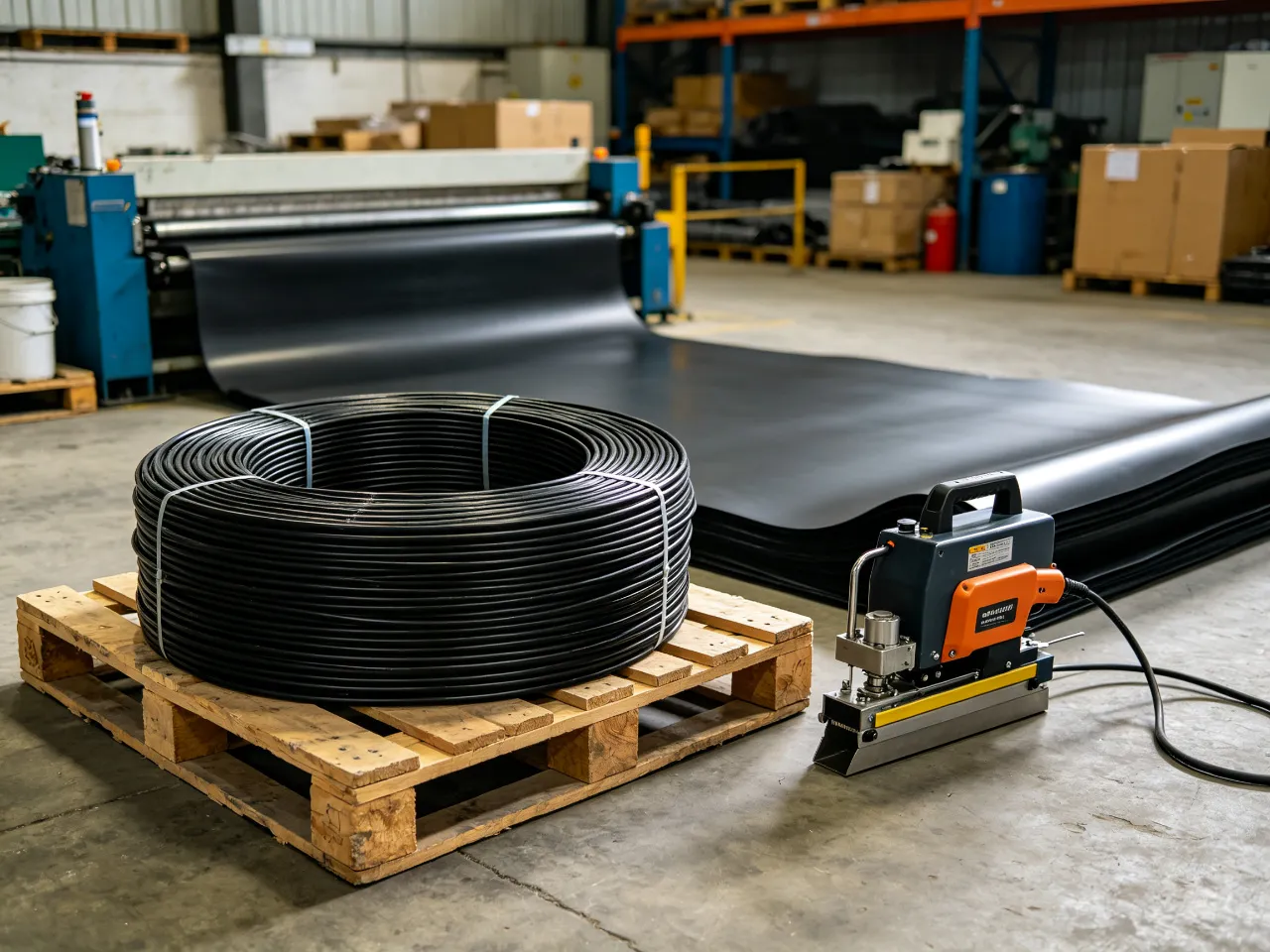
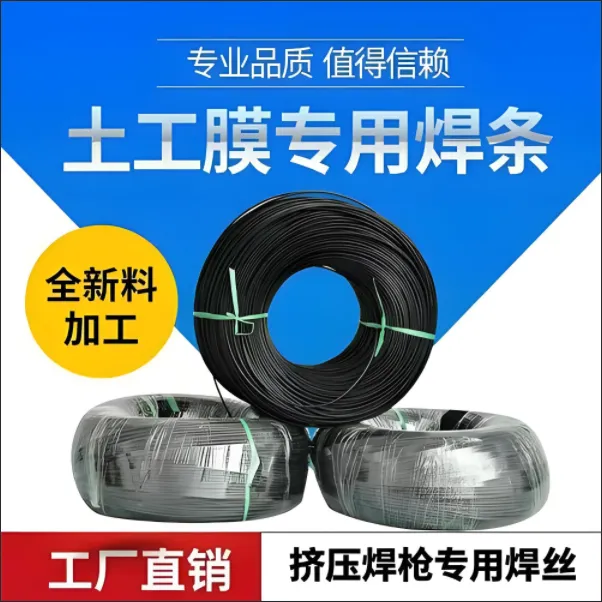
HDPE welding rods are mainly used together with extrusion welding machines to connect HDPE geomembrane, geotextile composite membranes and waterproof sheets. Correct operation is the key to forming a firm and leak-free weld.
Step 1 - Surface preparation: clean the welding area of the membrane with a dry cloth, remove dust, oil and moisture, and keep the surface dry. The overlap width of the two membranes should be no less than 80-100 mm.
Step 2 - Preheating: preheat the extrusion welding machine to the recommended temperature (about 220-260°C) according to the rod material and membrane thickness, and preheat the membrane surface with a hot air gun until the surface becomes soft and slightly glossy.
Step 3 - Welding: feed the welding rod evenly into the machine nozzle, weld along the seam at a uniform speed, ensuring the molten rod fully fills the V-groove of the joint. The welding speed should be stable to avoid under-welding or over-burning.
Step 4 - Inspection: after welding, check the weld seam appearance, cut a sample for tensile test, and use air pressure or vacuum box for leak detection. Qualified welds should be smooth, full, without bubbles, cracks or hollows.





 " />
" />


 English