





【 WeChat QR code consultation 】
+86 13698775878
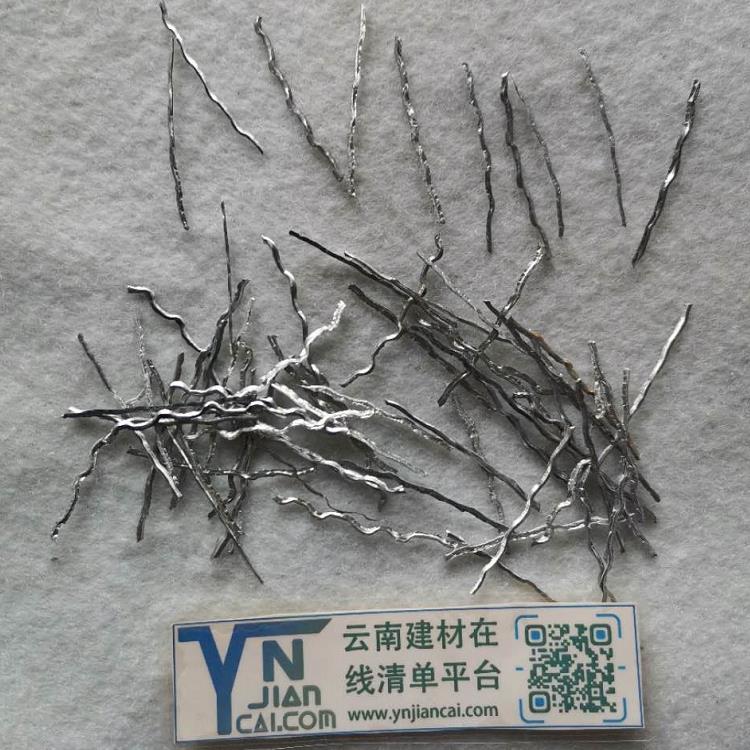
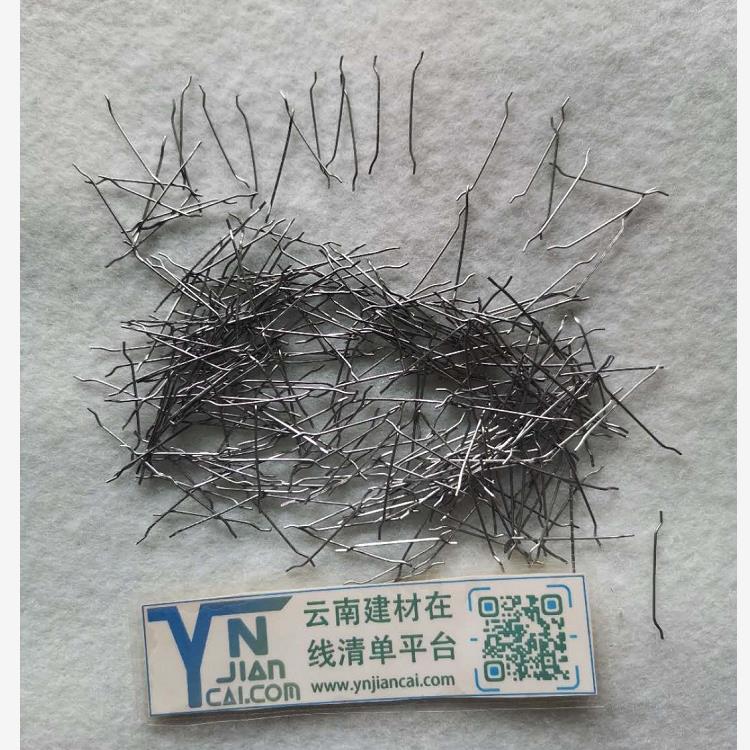
Common models of steel fiber are shear wave type and cold-drawn end-hook type. The tensile strengths of these two models are 300MPA and 600MPA respectively. If the above specifications do not meet your needs, you can select others and then explain in the remarks.
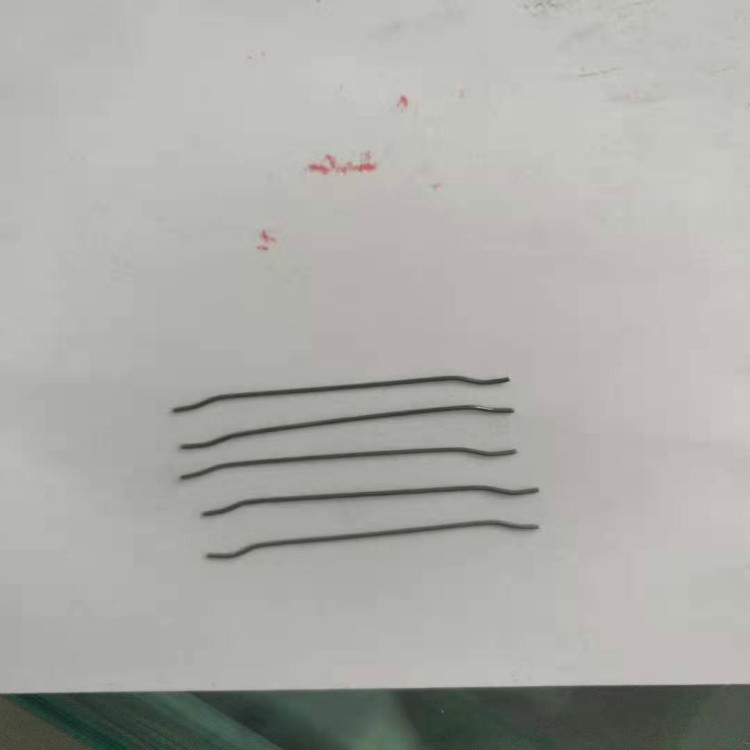
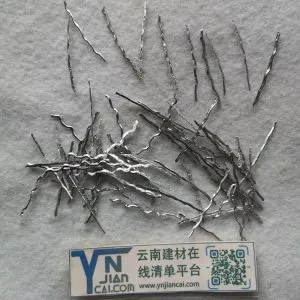
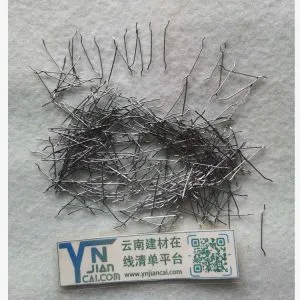
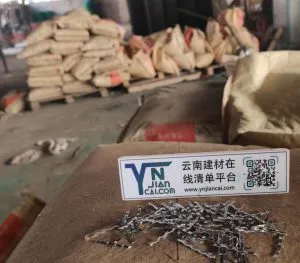
Steel fiber is a new, high-performance steel fiber variety. The mix proportion design method of steel fiber road is generally the same as that of ordinary concrete. The differences are: dual-control strength standard (compressive strength and flexural tensile strength); the steel fiber content is determined according to the flexural tensile strength required by the design; the unit water consumption and sand ratio are related to the fiber content. For every 0.5% (volume ratio) of steel fiber added, the unit water consumption increases by 6kg, and the sand ratio increases by 2%.
Steel fiber concrete has the same mixing, handling and construction performance as ordinary concrete. The fibers will not ball up in the concrete and are evenly distributed. It can be produced at commercial concrete mixing stations and used for pumping construction. The early slump loss of milled steel fiber concrete is relatively large, with 32% loss in 30 minutes and 42% loss in 2 hours. The actual workability of steel fiber concrete is better than that of ordinary concrete with the same slump. Steel fiber concrete has good material properties. Compared with ordinary concrete, its compressive strength is increased by 2-20%; flexural tensile strength is increased by 20-50%; splitting tensile strength is increased by 20-40%; wear resistance is increased by about 40%. Its physical and mechanical properties can fully meet the technical index requirements of urban road engineering and supporting components such as inspection manhole covers. The rough and clean surface of steel fiber can be firmly bonded with the cement paste in concrete, which is the fundamental reason why milled steel fiber improves various properties of concrete.
In addition, high-strength steel fiber concrete has been widely used in prefabrication, cast-in-place, production and construction of railway sleeper prefabrication, highway expansion joints, cement concrete pavement, etc. Its excellent performance can fully achieve good technical, economic, social and environmental benefits.
I. Bonding performance
Since the interfacial bonding between steel fiber and concrete matrix is mainly physical, that is, mainly the transmission of friction shear force, for steel fiber itself, the bonding performance should be improved from two aspects: fiber surface and fiber shape. There are four specific methods as follows.
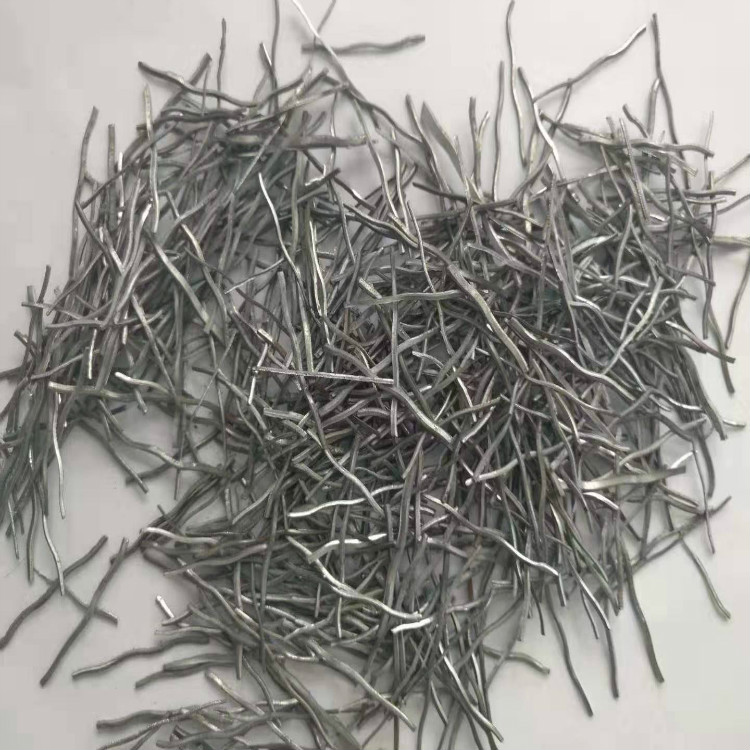
1. Make the steel fiber surface rough and the cross-section irregular. Production by melt extraction method can achieve this purpose. Because when steel fiber is rapidly cooled in air, the surface shrinkage is uneven and becomes rough, while the cross-section also shrinks into a crescent shape, increasing the contact area with the matrix. One surface of milled steel fiber is smooth and the other is rough, which also increases the contact area with concrete.
2. Perform plastic processing on the fiber at certain intervals along the steel fiber axis direction. For example, "Shinko" steel fiber from Kobe Steel of Japan, "XOREX" steel fiber from Rebound Company of the United States (Figure 2-1, c), and "S-2" and "S-3" steel fibers from Qing'an Iron and Steel Plant. Due to the surface being pressed into ridges or waves, the mechanical bonding force is increased.
3. Make the two ends of steel fiber irregular. For example, steel ingot milled steel fiber has anchoring platforms at both ends; "DRAMIX" steel fiber from Baker Company of the United States (Figure 2-1, e) and "S-4" and as-so steel fibers from Qing'an Iron and Steel Plant are all made with hooks at both ends; there are also large-head steel fibers extracted by melt extraction method. Due to the anchoring effect at both ends, the pull-out resistance is improved.
4. Coat epoxy resin on the steel fiber surface and perform micro-rusting treatment. This method is not as effective as the previous methods in improving interfacial bond strength, but it also has a certain reinforcing effect.
II. Hardness
No matter which processing method is used to manufacture steel fiber, it encounters high heat and rapid cooling during processing, equivalent to a quenched state. Therefore, the surface hardness of steel fiber is relatively high. Bending rarely occurs when mixing for concrete reinforcement. If the steel fiber is too hard and brittle, it is also easy to break during mixing, affecting the reinforcing effect. When producing steel fiber by melt extraction method, the steel fiber centrifugally ejected from under the melt extraction wheel is still in a high temperature state and must be dispersed and cooled by drum or vibration conveying methods. Otherwise, the steel fibers will aggregate, making it difficult to dissipate heat, which instead plays an annealing role.
III. Corrosion resistance
From the introduction of corrosion resistance tests of steel fiber concrete, it can be seen that cracked steel fiber concrete members in humid environments, the concrete at the cracks is carbonized, and the steel fibers in the carbonized area rust. The carbonization depth and rust degree develop over time. For steel fiber concrete, it mainly utilizes post-cracking arc and post-cracking toughness. Although the crack width is smaller than that of reinforced concrete, there are cracks after all. Therefore, anti-rust measures should be taken for steel fiber concrete used in humid environments, especially at the seaside. Tests prove that under the premise of ensuring the same load-bearing capacity of steel fiber concrete members, using steel fibers with larger diameters can improve corrosion resistance. Using steel fibers coated with epoxy resin or galvanized can improve corrosion resistance. If the construction process permits, this type of steel fiber can be used only in the 1-2cm surface layer of concrete, and stainless steel fiber can also be used if necessary.
Scan code consultation


 English