




 " />
" />【 WeChat QR code consultation】
+86 13698775878
Kunming Pande Engineering Materials Co., Ltd. 13698775878 Li
Grass grid to achieve its excellent load-bearing and greening effects, half depends on product quality, and the other half depends on standardized and professional construction. Kunming Pande Engineering Materials Co., Ltd., combined with years of project experience, has sorted out a set of standardized grass grid construction processes for you, ensuring that every project of yours can achieve ideal results.
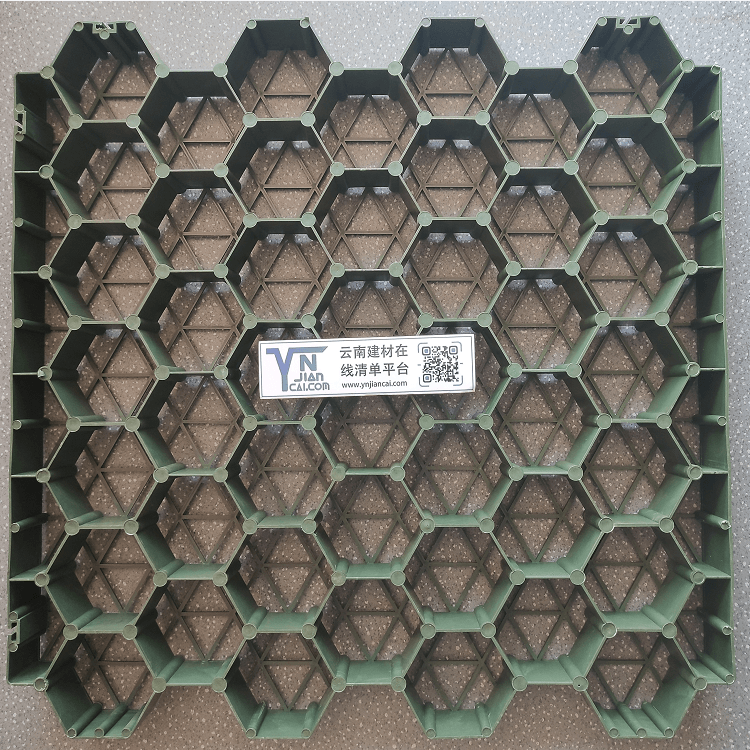
The key to the success of the grass grid system lies in forming a stable, permeable "foundation-structure-vegetation" layered system.
Material confirmation:
Grass grid: Confirm the use of high-strength HDPE grass grids provided by Kunming Pande, check that the quantity and specifications are correct.
Auxiliary materials: Prepare boundary curbstones (or curbs), geotextile (non-woven fabric), planting soil, etc.
Site planning and layout:
Determine the scope of the construction area according to the design drawings.
Clearly mark the boundary lines of the area with lime powder or ink lines, especially key positions such as vehicle entrances and exits.
The compaction degree of the foundation directly determines the final load-bearing capacity of the grass grid system.
Excavation and leveling: Excavate the foundation trench according to design requirements, ensuring that the foundation elevation meets slope and drainage requirements.
Compaction and rolling: Repeatedly compact the bottom of the foundation trench, the compaction degree needs to reach more than 90%. This is a key step to prevent future ground settlement. For heavy-load areas such as fire passages, it is recommended to use a road roller for compaction.
Setting cushion layer:
Lay a layer of 3-5 cm thick coarse sand or graded crushed stone on the compacted foundation as a leveling layer and drainage layer.
Scrape flat with a scraper, and sprinkle an appropriate amount of water and re-compact to ensure the surface is flat.
Laying geotextile: Lay geotextile (non-woven fabric) on the flat cushion layer, its main function is to prevent soil loss and prevent base soil from mixing with planting soil, while maintaining water permeability.
Grass grid laying:
Start from the boundary: Following the layout boundary, start laying Kunming Pande grass grids from one side.
Interlocking splicing: Using the male-female tenon buckle design on the product edges, tightly buckle each grass grid to ensure the entire area is connected as one and bears force together.
Complete coverage: Cover the entire construction area in sequence.
Cell filling:
Fill high-quality planting soil into the honeycomb cells of the grass grid.
Key tip: The filling soil should be slightly lower than the top of the grid by about 1-2 cm, leaving space for turf growth and preventing soil from being washed by rain onto the grid surface to form mud.
Settlement and replenishment: After filling, sprinkle an appropriate amount of water to let the soil settle naturally, then replenish soil to a suitable height.
Vegetation establishment:
Sowing: Evenly spread grass seeds on the soil surface, then gently rake flat.
Laying turf: If immediate results are needed, you can directly lay trampling-resistant, vigorous turf (such as Manila grass, Bermuda grass), and ensure the turf is in close contact with the soil.
Sufficient watering: Immediately conduct the first permeable watering after construction is completed, promoting grass seed germination or turf rooting.
Set up warnings: Before the turf roots are fully established (about 2-3 weeks), warning signs or fences should be set up to prohibit vehicle rolling, to ensure the lawn survives smoothly.
Regular maintenance: After survival, normal watering, fertilizing and mowing can maintain a long-term lush landscape.
Drainage is key: The foundation must reserve a certain drainage slope (usually not less than 0.5%), ensuring rainwater can drain smoothly.
Joint treatment: For grass grids that need to be cut in irregular areas, ensure they are tightly fixed to the boundary after cutting.
Material selection: Never use impermeable, easily compacted soil such as clay as filling soil, it is recommended to use loose sandy loam.
Summary:
Standardized construction is the final link to unleash the full performance of Kunming Pande grass grids. Following the above steps, you will be able to easily create a beautiful and practical high-load-bearing grass-planted ground.
We are not only a supplier of products, but also your partner in solutions. If you encounter any technical problems during construction, the professional team of Kunming Pande Engineering Materials Co., Ltd. is ready to provide technical support for you, helping your project achieve complete success!
Scan code consultation



 English