




 " />
" />【 WeChat QR code consultation】
+86 13698775878
Cable trays support and protect electrical cables in buildings, plants and infrastructure projects. This overview introduces the common types, materials and applications of cable tray systems.
Ladder-type trays have two side rails connected by rungs, offering good ventilation and easy cable access, and are suitable for heavy cables. Perforated trough trays have a solid base with holes, providing more support for small cables. Wire mesh trays are flexible and used for light cabling.
Galvanized steel is the common choice for indoor and outdoor use, with hot-dip galvanizing for corrosion resistance. Stainless steel trays are used in corrosive or hygienic environments, while aluminum trays offer light weight for long spans. The finish is selected according to the environment.
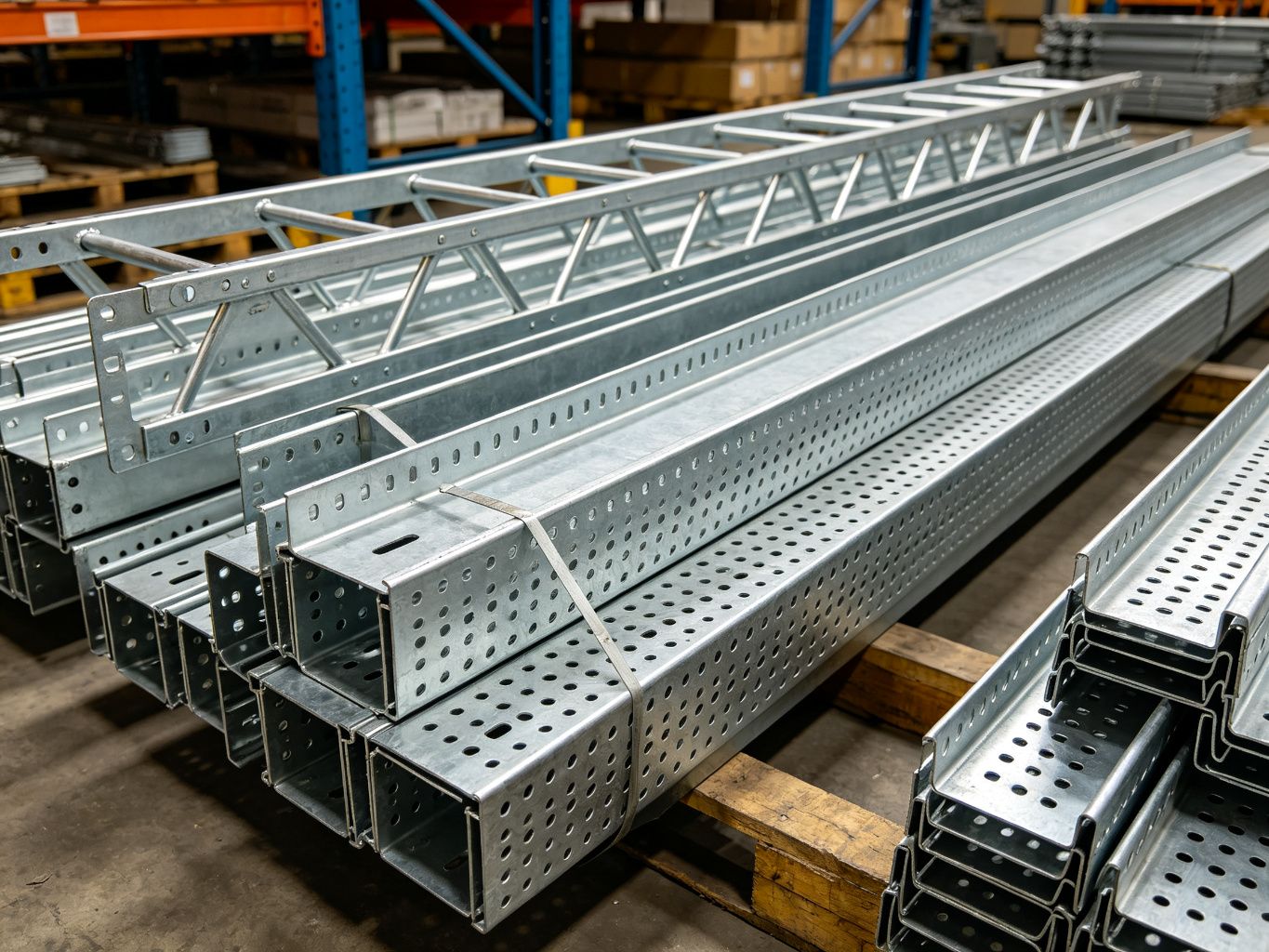
Cable trays are used in power distribution, industrial plants, data centers, commercial buildings and tunnel projects. They organize cables neatly, allow future cable additions, and improve the ventilation around cables compared with closed conduits.
Choose the tray type, width and material according to the cable load, span length and environment. Consider the number of cables and their diameter to determine the fill ratio. Fittings such as elbows, tees and covers are selected to complete the routing.
Fix the tray supports at proper intervals to carry the total cable load. Keep a clearance between the tray and other services, and bond the tray to the earthing system as required. Follow the manufacturer instructions for joint and support spacing.
Scan code consultation


 English