




 " />
" />【 WeChat QR code consultation】
+86 13698775878
Grass grid, also known as grass paver or grass reinforcement grid, is a lightweight plastic module used to protect turf and create load-bearing green surfaces. It is a popular choice for parking areas, fire lanes, slopes and landscaping projects. This article gives a complete overview of grass grid types, materials and applications.
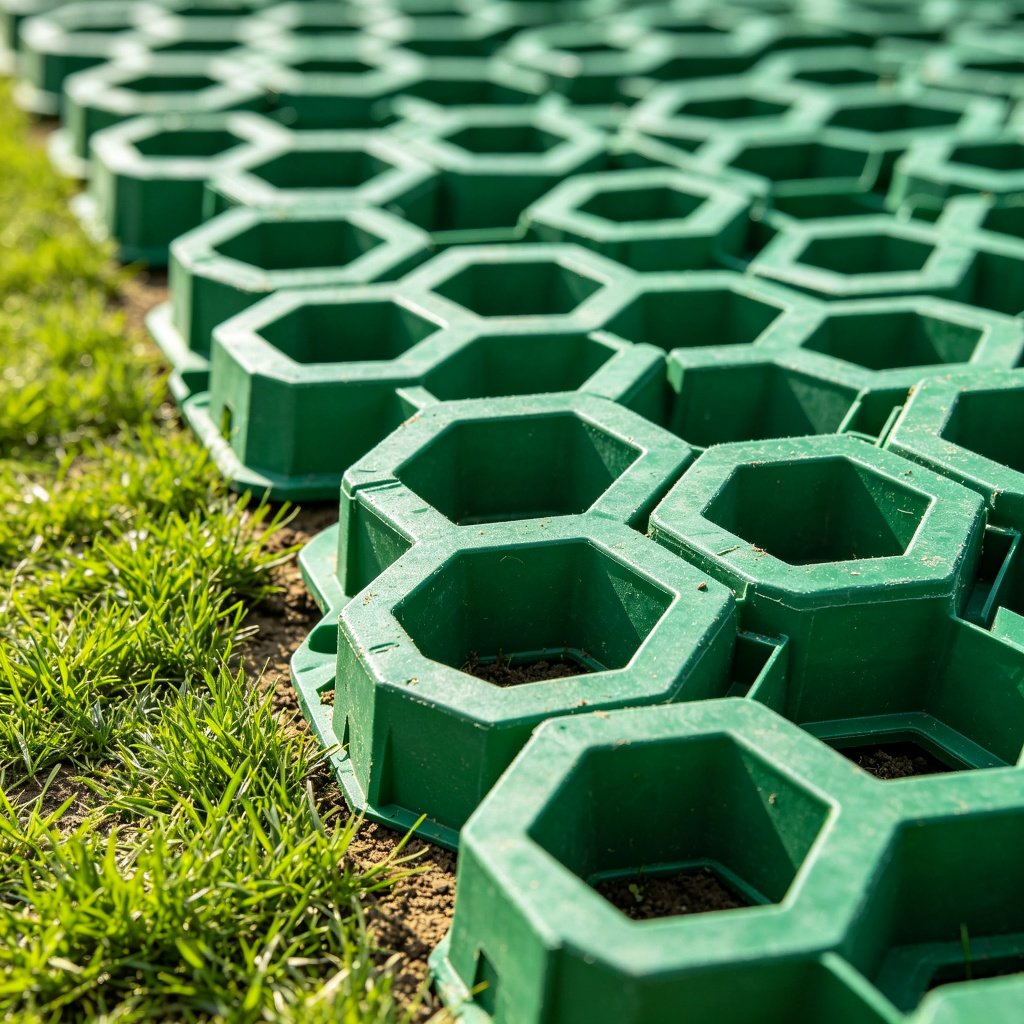
A grass grid is an open-cell honeycomb-like module made of high-density polyethylene (HDPE). The cells are filled with soil and grass seed, allowing grass to grow while the plastic structure carries the load. The result is a stable, green, permeable surface that can support vehicles and pedestrian traffic.
The most common material is HDPE produced by injection moulding, which gives high strength, UV resistance and a long service life of 20 years or more. Some products are made from recycled plastic, offering a lower-cost option for non-critical applications.
Our factory produces high-quality HDPE grass grid with interlocking edges for easy installation. Visit the grass grid product page for sizes, colours and factory-direct pricing.
Scan code consultation


 English