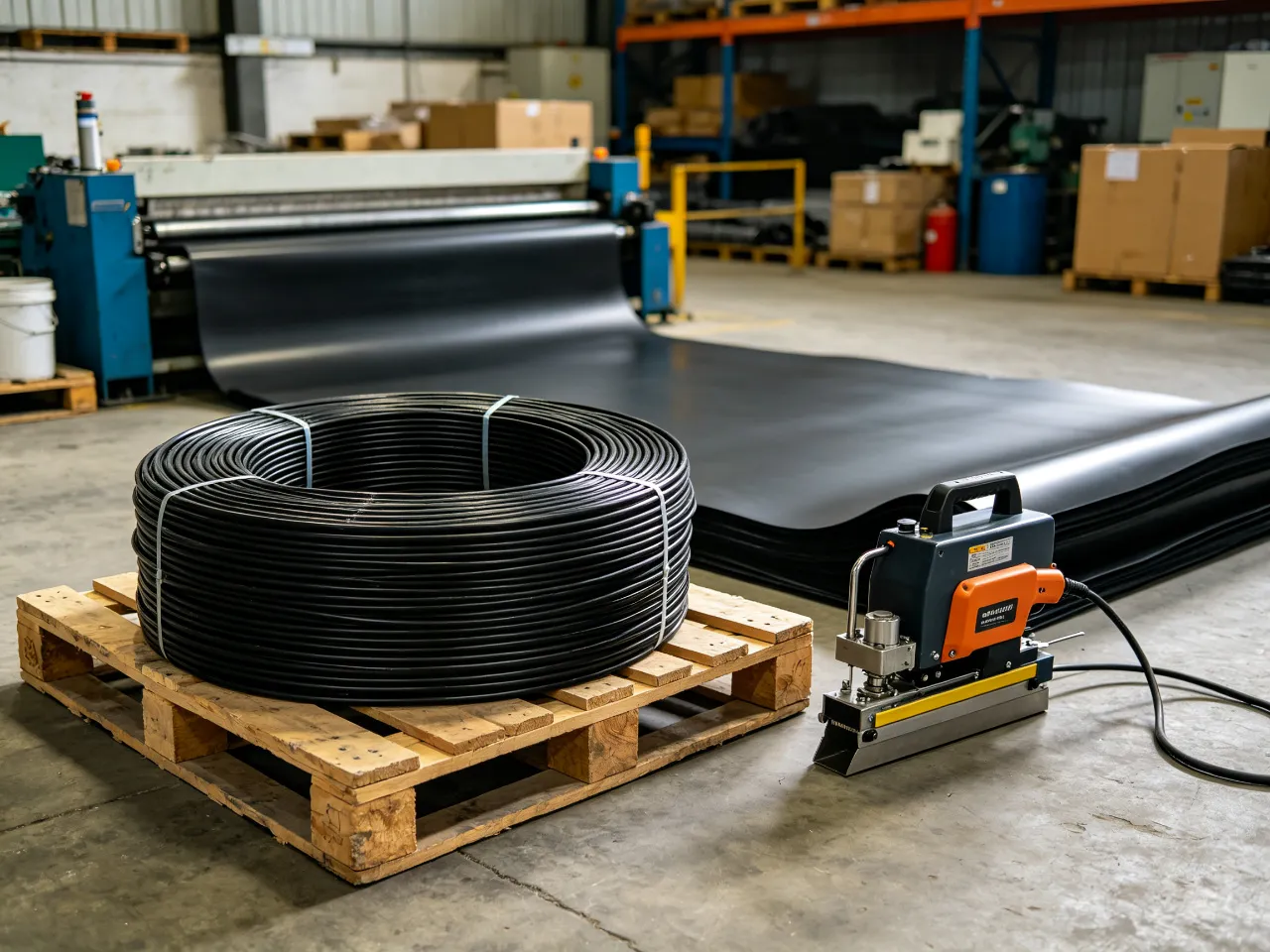
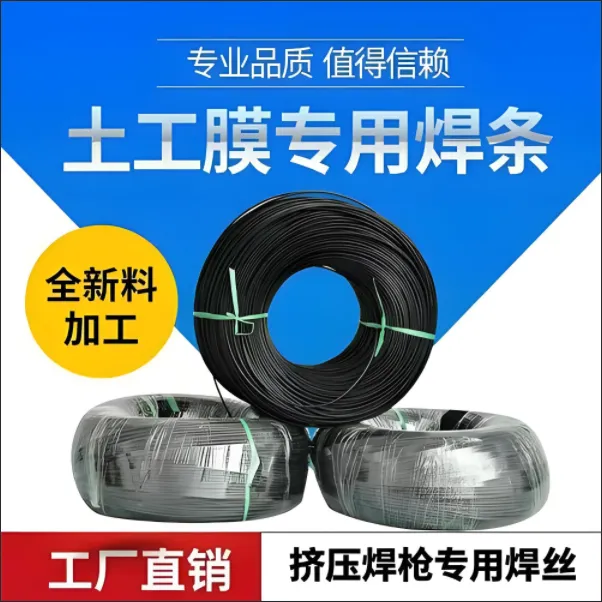
The HDPE geomembrane welding rod (plastic welding rod) is a key consumable used to join HDPE geomembrane sheets by hot air or extrusion welding. Its quality directly determines the sealing reliability of the whole anti-seepage system, so strict inspection is required before use.
Main testing items include: raw material grade (virgin HDPE resin content), diameter uniformity and ovality, tensile strength at break, elongation at break, density, melt flow rate, carbon black content and moisture content. Each roll should be sampled at both ends and the middle for testing.
Testing method: measure the diameter at 5 evenly spaced points with a vernier caliper and calculate the average value; tensile and elongation tests are carried out on a universal testing machine according to the corresponding plastic rod standard; melt flow rate is tested with a melt flow indexer at the specified temperature and load.
Quality requirements: the rod surface should be smooth, without bubbles, cracks or impurities; the diameter tolerance should be within +/-0.3 mm; the tensile strength of the weld seam formed by the rod should not be lower than 80% of the base material strength. All qualified batches should be accompanied by an inspection certificate.
Only by strictly controlling the quality of welding rods can the long-term anti-seepage performance of the geomembrane liner be guaranteed. Contact us for factory inspection reports and certificates of HDPE welding rods.





 " />
" />


 English