





【 WeChat QR code consultation 】
+86 13698775878
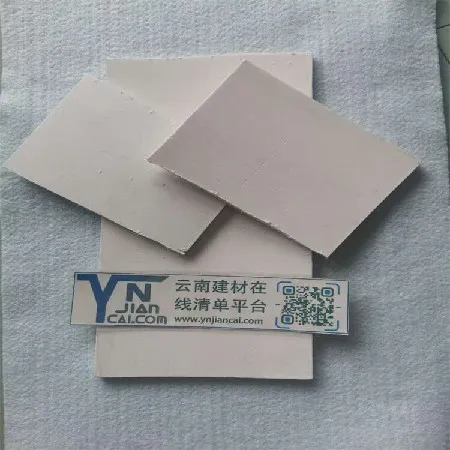
PTFE board is usually custom-made, so it is priced by kilogram. When purchasing, you can first add the product to the list, then fill in the required length and width dimensions in the remarks position of the sent list, and how many pieces are needed. If you find it inconvenient, you can also directly fill in your phone number in the sent list, and we will call you to contact.
1. Used in electrical industry, as insulation layer, corrosion-resistant and wear-resistant materials for power and signal lines in aerospace, aviation, electronics, instruments, computers and other industries. Can be made into films, tube plates rods, bearings, gaskets, valves and chemical pipelines, pipe fittings, equipment container linings, etc.
2. Used in electrical appliances, chemical industry, aviation, machinery and other fields to replace quartz glassware. Applied to ultra-pure chemical analysis and storage of various acids, alkalis, organic solvents in atomic energy, medicine, semiconductor and other industries. Can be made into high-insulation electrical parts, high-frequency wire and cable sheaths, corrosion-resistant chemical vessels, cold-resistant oil pipelines, artificial organs, etc. Can be used as additives for plastics, rubber, coatings, inks, lubricating oils, greases, etc. [4]
3. This product is high temperature resistant, corrosion resistant, has excellent electrical insulation, anti-aging, low water absorption, excellent self-lubricating performance. It is a universal lubricating powder suitable for various media, can be quickly applied to form a dry film, used as a substitute for graphite, molybdenum and other inorganic lubricants. Suitable as release agent for thermoplastic and thermosetting polymers, with excellent bearing capacity. Widely used in elastomer and rubber industry and anti-corrosion.
4. Used as filler for epoxy resin, improve wear resistance, heat resistance and corrosion resistance of epoxy adhesive.
5. Mainly used as binder and filler for powder cakes.
PTFE board Why use PTFE board in building stairs? Stair PTFE board is mainly used in engineering stairs as a rigid PTFE stair support, which is quite widely used in current stair use. Because stairwells do not participate in the overall seismic calculation of the structure, sliding supports need to be designed according to current regulations. The variety and specifications of PTFE boards used for stairs must meet design requirements and construction specification regulations. The surface of PTFE board is required to be flat, clean, and free of damage on the surface.
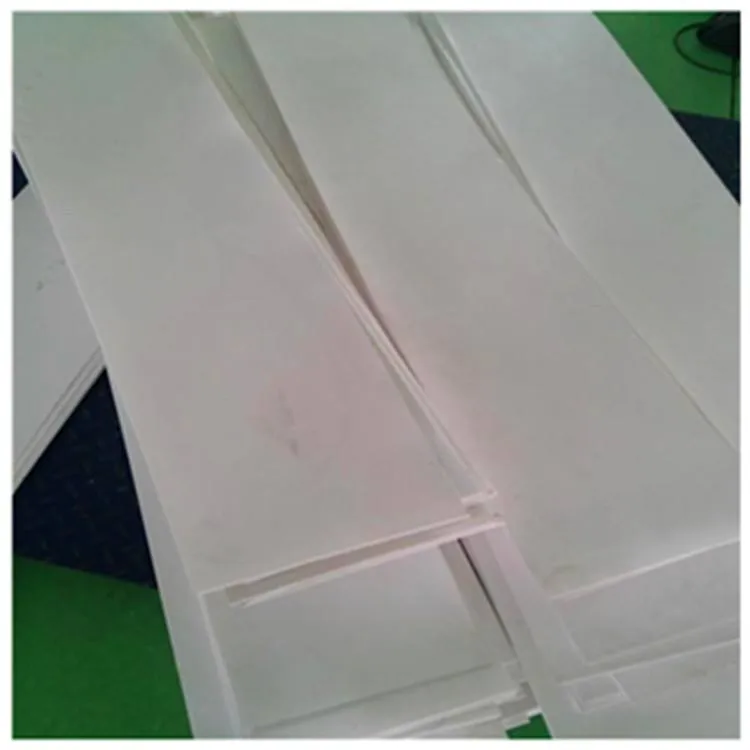
Usage method: Special PTFE board for stairs generally has a thickness of 5mm; its length is the length of the stair slab; width is the tread width. Cutting stair PTFE board requires using a profile cutting machine for cutting. After the stair PTFE board is installed, cover and protect the parts easily contaminated with adhesive tape iron covers or plastic film. For parts easily scratched, safety guardrails should be set up for protection. PTFE board has the best chemical corrosion resistance, does not age, has the lowest friction coefficient among known solid materials, and can be used at -180℃~+260℃ under no load. Electrical properties: PTFE has low dielectric constant and dielectric loss in a wide frequency range, and high breakdown voltage, volume resistivity and arc resistance. PTFE (F4, PTFE) has a series of excellent performance: high temperature resistance—long-term use temperature 200~260 degrees, low temperature resistance—still soft at -100 degrees; corrosion resistance—resistant to aqua regia and all organic solvents; weather resistance—the best aging life among plastics; high lubrication—has the smallest friction coefficient among plastics (0.04); non-stick—has the smallest surface tension among solid materials and does not adhere to any substance; non-toxic—has inertia; excellent electrical properties, is an ideal Class C insulation material. Teflon board PTFE commonly known as plastic king, F4, or Teflon.
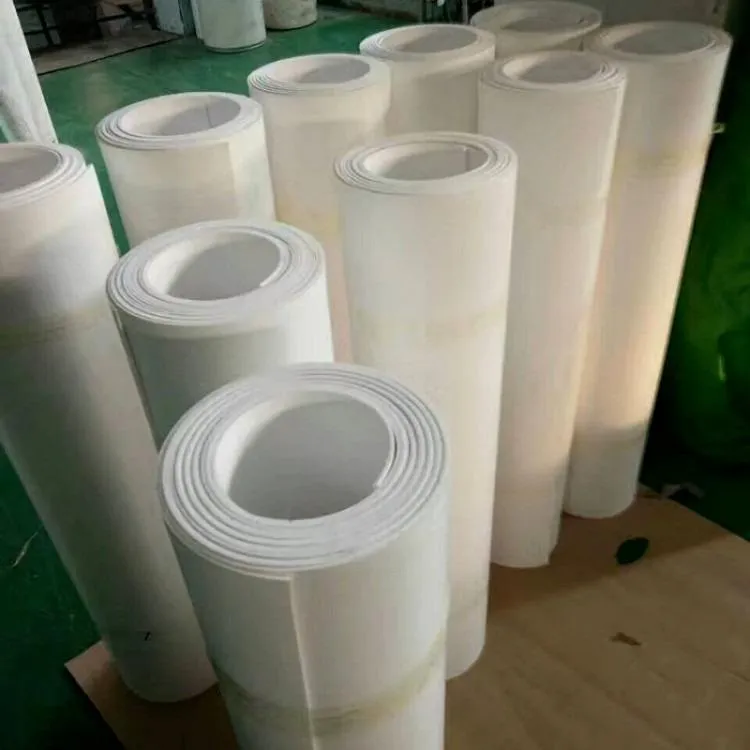
PTFE boards are divided into two types: molded boards and turned boards. Molded boards are made of PTFE resin by molding at room temperature, then sintering and cooling. Turned boards are made of PTFE resin through pressing, sintering, and rotary cutting.
Scan code consultation



 English