




 " />
" />【 WeChat QR code consultation】
+86 13698775878
Slopes along roads, embankments and drainage channels are prone to erosion caused by runoff and rain. Grass grid pavers provide a simple solution for slope protection by holding the soil and supporting vegetation. This article explains the installation and anchoring steps.
The grid cells confine the soil and prevent it from washing away, while grass roots grow through the cells to stabilize the surface further. Compared with hard concrete revetment, grass grids keep a natural green appearance and allow water infiltration.
Trim the slope surface and remove loose soil, stones and debris. Compact the surface lightly so the grids sit evenly. On steeper slopes, a thin geotextile underlay can be used to stop soil loss beneath the grid.
Lay the grass grid panels from the toe of the slope upward, so the upper panels overlap and hold the lower ones in place. Interlock the clips between panels firmly to create a continuous cover.
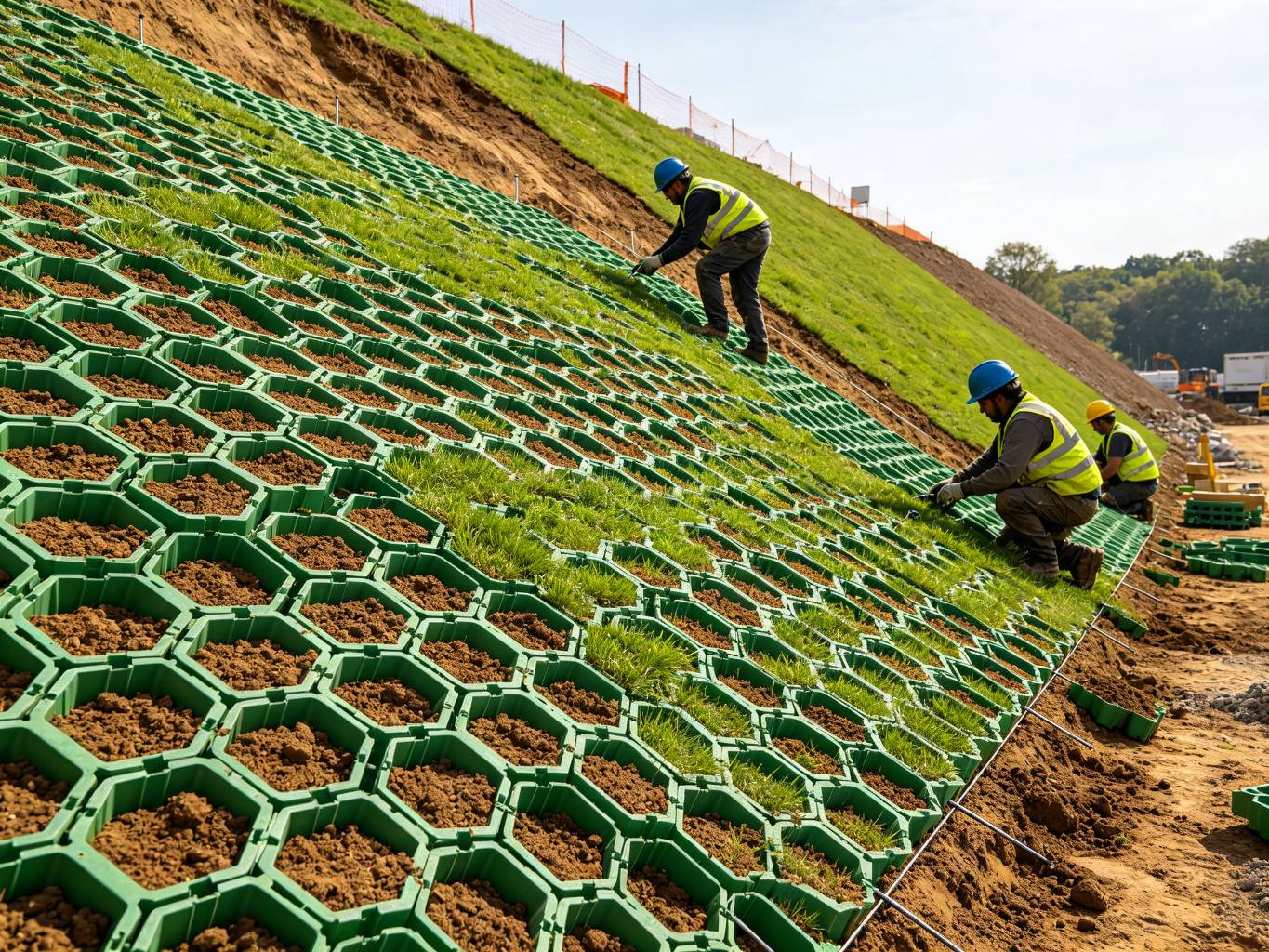
Fix the grids with U-shaped pins or anchor pegs at regular intervals, especially at the top edge and around the perimeter. The anchor spacing depends on the slope angle and the expected runoff; typical spacing ranges from 500 mm to 1000 mm.
Fill the cells with topsoil and sow grass seed. For steep slopes, hydroseeding or erosion control blankets help the grass establish quickly. Keep the surface watered during the first weeks until the vegetation covers the slope.
Scan code consultation


 English