




 " />
" />【 WeChat QR code consultation】
+86 13698775878

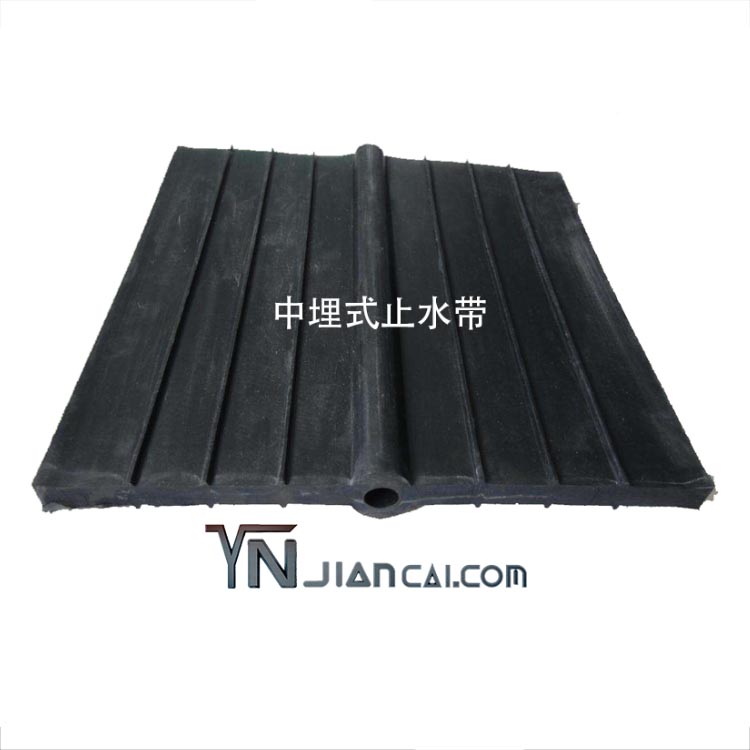
A waterstop refers to a special waterstop shaped concrete material designed for drainage between joint parts of concrete engineering buildings. In the design process of concrete engineering pouring, it is first connected directly with the concrete structure through pre-embedded steel bars in the concrete deformation joint structure to form a whole, which can effectively prevent water leakage and local water seepage at the deformation joints between adjacent building structures, and at the same time can play functions such as shock absorption and buffering. It is widely used in river dikes, tunnels, water conservancy and hydropower, building basements in high-rise buildings, civil air defense and other projects. The installation of waterstops is a key link in key processes. Waterstops are usually arranged at regional deformation joints and construction joints of lining concrete, which is also the weakest area of waterproofing in bridge lining structures. The quality of waterstop construction technology is directly related to the waterproof effect of the bridge. The traditional middle-buried waterstop bends the waterstop into an "L" shape through steel bars and fixes it in the wooden formwork at the sealing end of the lining concrete. After removing the sealing end wooden formwork, the waterstop must be chiseled out immediately. In specific construction, positioning and fixing are relatively difficult, and displacement and local falling off are easy to occur during concrete pouring, making installation quality difficult to control.
A waterstop is a structural physical property that utilizes the material's relatively high structural elastic deformation, enabling it to fully withstand the structural elasticity and structural deformation tension that can be generated under the influence of water and various mechanical loads. It has been widely used in engineering and installed and fixed at various structural construction joints and various structural deformation joints of many bridge projects, forming such a structurally sturdy and sealed structure, effectively and timely accurately and effectively preventing rainwater from directly leaking and pouring into, seeping into the interior of bridge structural cracks, ensuring that the bridge structure has a long-term improved service life, as well as a series of important performance functions such as its buffering capacity and shock absorption capacity. At present, there are still many famous brand manufacturers producing and manufacturing various waterstop material products in the Chinese market, and the number of specification types is also many. In addition to the conventionally produced E-type and P-type specification products, there are also a large number of cross-type, T-type, slope-type specification products and internal and external corner-type products that can be specially customized to meet the special product shape and specification requirements of engineering customers.
For bridge building structures, anti-seepage engineering affects the normal use function and service life of the structure, which is very critical. According to the investigation of leakage problems in built bridge building structures, the deformation joint part is often the key point and weak point of leakage, and the commonly used anti-seepage measure at deformation joints is to set various rubber waterstops. Once the rubber waterstop at the deformation joint has cracks or damage, it will be very difficult to carry out repair work without affecting the normal deformation function of the deformation joint.
For bridge deformation joints, one of the commonly considered anti-seepage treatments and rubber waterstop measures usually adopts rubber waterstops with galvanized steel edge mesh pre-embedded in the joints. Among them, the galvanized steel edge strip mainly plays an important role in enhancing the stress embedding property of the prestressed concrete waterstop when compressed in the prestressed reinforced concrete frame structure, and at the same time blocks the water seepage channel caused by improper construction at the junction of rubber and concrete. Due to the extremely high elastic strength and deformability of the rubber material itself, the rubber waterstop will still maintain good waterproof properties and sealing effects under a certain degree of stress deformation load. Compared with other traditional prestressed concrete waterstops, waterstops can also appropriately increase and improve their anti-drainage and water-blocking functions. Under the high water pressure environment of bridges, it can also be comprehensively considered to appropriately reduce the local water accumulation formed behind the bridge and the substrate masonry wall by moderately increasing the anti-drainage and water-blocking effects, improving the overall anti-seepage pressure capacity of the entire bridge structure. The main product of rubber waterstop is a high-performance product designed and processed by utilizing the various special structural high elastic capacity and deformation-resistant elastic capacity that ordinary elastic rubber materials themselves are difficult to simultaneously possess, and made through special technology. It can be widely used in special flexible waterstop structure engineering at deformation joints of various underground space engineering such as small-scale engineering water conservancy hubs, dike culverts and sluices, water conveyance engineering aqueducts, shore-retaining dams, subway bridges, civil air defense works, basements on high-rise building structures. Rubber waterstops are generally automatically pre-embedded or laid within the scope of reinforced concrete deformation joints according to requirements when pouring prestressed concrete, and directly form an organic sealed whole with the prestressed reinforced concrete body wall, which can simultaneously and effectively prevent water flow from causing seepage and leakage of the prestressed concrete structure of buildings at the deformation joints of various structures, and can also effectively play a certain role in shock absorption and buffering, thereby truly ensuring the waterproof construction safety requirements achieved by the safe, normal and efficient work of various underground structures. Rubber waterstops are still an indispensable part and one of the most important structural safety auxiliary and reinforcing protective materials existing in the use environment of building engineering structures. Their overall quality status is related to the long-term use structural safety performance level and service life of the entire anti-reinforcement and engineering system itself.
Scan code consultation


 English