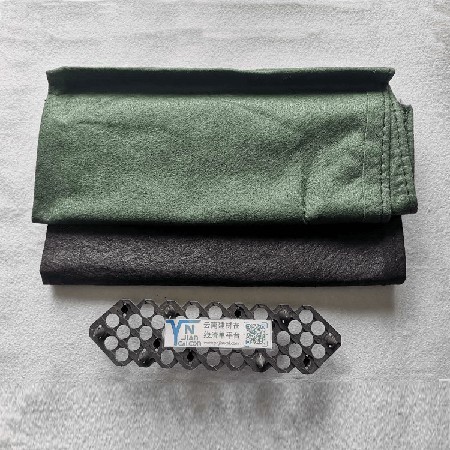
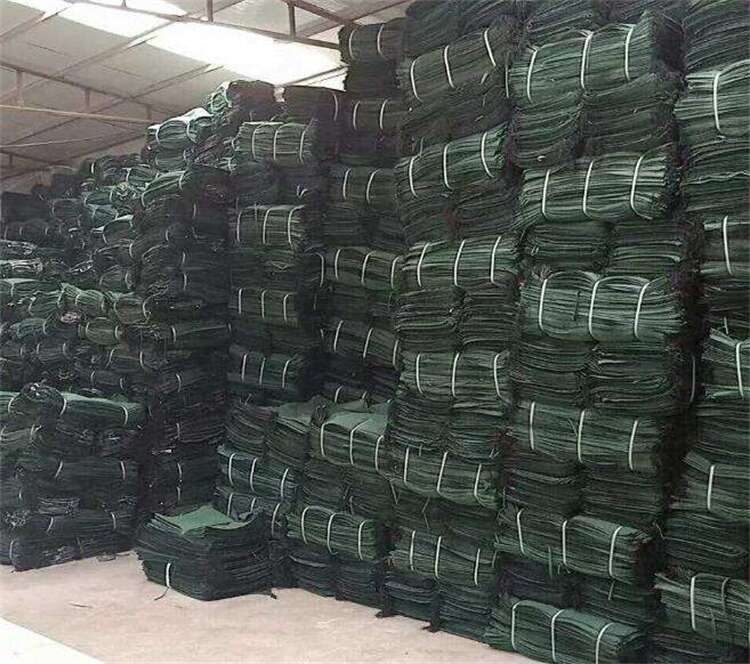
Common types of ecological bags are black and green. In terms of material, green is more expensive. Usually priced by gram weight. If the above specifications do not meet your needs, you can select others and then explain in the remarks.
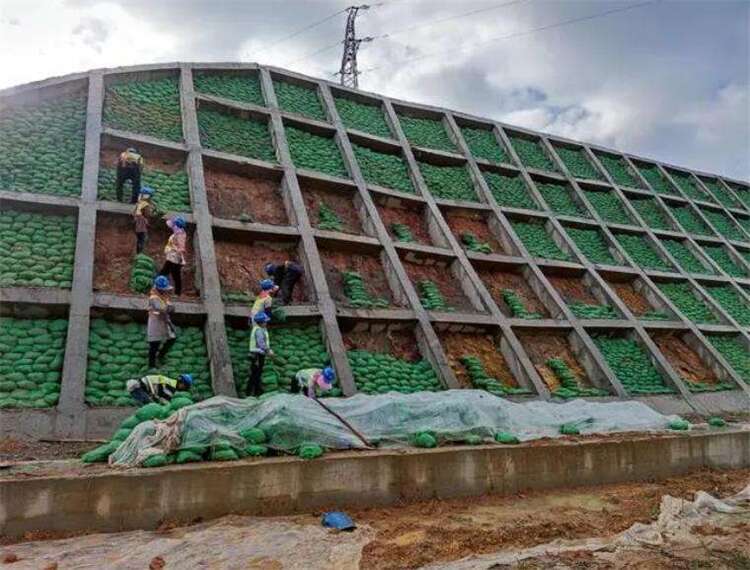
Ecological bag is a bag made of double-sided ironed needle-punched non-woven fabric made of polypropylene (PP) or polyester fiber (PET) as raw material. Strict screening has been carried out on indicators such as thickness, unit mass, physical and mechanical properties, shape, fiber type, force mode, direction, geometric size and water permeability of UV-resistant ecological bags, and equivalent pore size to meet plant growth. It has the characteristics of UV resistance, anti-aging, non-toxic, non-combustible, and non-extending cracks, truly achieving zero pollution. Mainly used for building flexible ecological slopes. Ecological bag slope protection and greening is one of the important construction methods in barren hills, mine restoration, highway slope greening, river bank slope protection, and inland river regulation.
Ecological bags have excellent physical and chemical properties. This specially formulated material can resist UV erosion, is not affected by chemical substances in soil, does not undergo qualitative change or rot, is permanently non-degradable and can resist pest erosion, anti-aging, non-toxic, resistant to acid, alkali and salt erosion and microbial decomposition, only permeable to water but not soil, friendly to plants and can be vegetated; as the latest type of slope component material, it has the following environmental universal advantages:
Under the premise of fully considering the requirements of many disciplines such as material mechanics, hydraulics, biology, botany, etc., strict screening has been carried out on indicators such as thickness, unit mass, physical and mechanical properties, shape, fiber type, force mode, direction, geometric size and water permeability of ecological bags, and equivalent pore size to meet plant growth. It has the characteristics of UV resistance, anti-aging, non-toxic, non-combustible, and non-extending cracks, truly achieving zero pollution.
Ecological bags have targeted filtration function of permeable to water but not soil, which can prevent the loss of fillers (mixture of soil and nutrients), and can also realize normal exchange of water in soil. The water required for plant growth is effectively maintained and supplemented in a timely manner, which is very friendly to plants, allowing plants to grow freely through the bag body. The root system enters the engineering foundation soil, like countless anchor rods completing the re-stabilization between the bag body and the main body. The longer the time, the moresecure it becomes, further achieving the purpose of building stable permanent slopes, greatly reducing maintenance costs.
For ecological bags with special functional requirements, their functional design is a necessary condition for the stability of flexible slope structures.
Illustrated by equivalent pore size:
I. Pore size too large (bag body, material too thin)
A. The quality of bag contents will be greatly lost when eroded by rainwater and flowing water, causing the unit weight to be greatly reduced, the original mechanical design value to change greatly, and the mechanical structure to be destroyed.
B. The bag contents are easily lost greatly under water erosion, and the settlement greatly exceeds its natural settlement, which does not match the original design plan, causing collapse.
II. Pore size too small (bag body material too thick)
A. It will hinder vegetation growth and root extension, seriously affecting the structural stability of flexible slopes.
B. Under certain specifications of the bag body, the weight of the bag contents is a fixed value in the mechanical structure design of flexible slopes. Too small pore size reduces its water permeability. When a large amount of water infiltrates, its unit weight is greatly enhanced, causing the original force structure value to increase, resulting in structural deformation and collapse.
C. The slope hydrostatic pressure will therefore increase, causing the slope body to collapse.








 English